Benches Built Around Your Equipment: Custom Workstations for Test Rigs, Instruments, and Special Applications
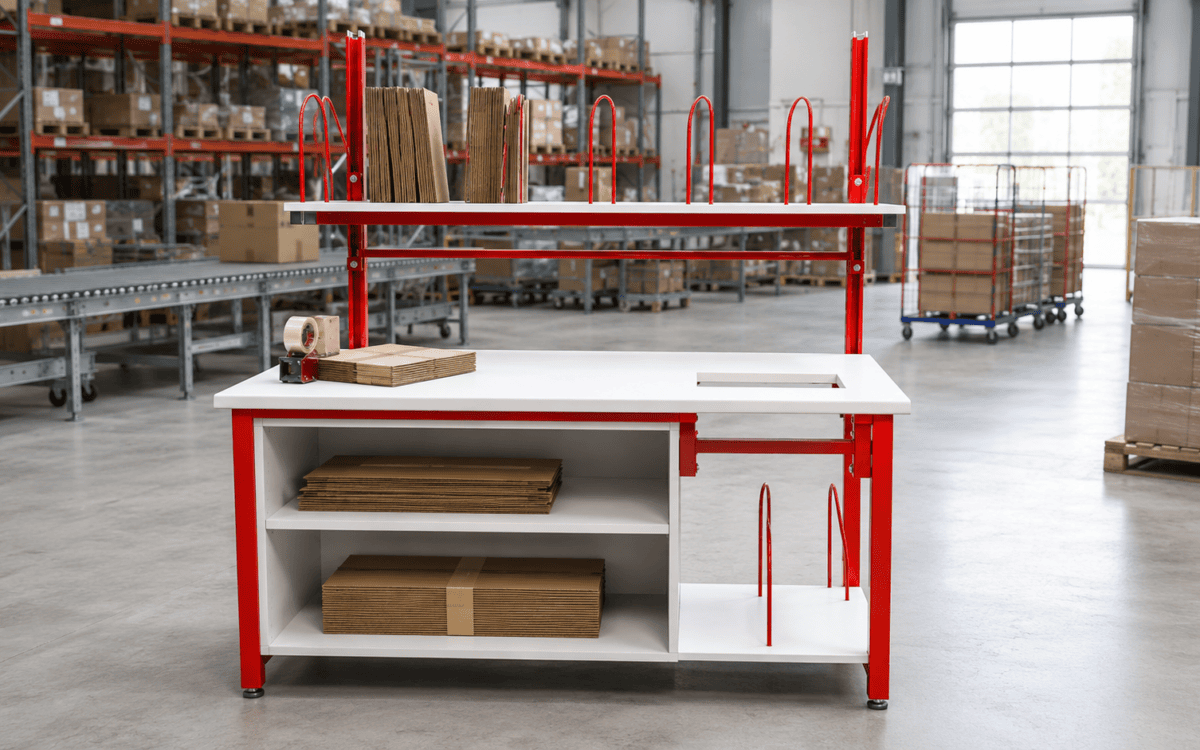
Specialized equipment rarely fits neatly into a standard furniture catalog. A test rig may place most of its weight on four small feet. A research instrument may need a stable surface but still require access from the back. A training table may need power during use, then tilt and nest when the room is cleared. In each case, choosing a bench by width and color alone can create problems that only become visible after installation.
A better approach is to design from the equipment outward. The workstation becomes part of the operating environment, coordinating structure, ergonomics, utilities, mobility, maintenance access, and the right worksurface for the task. That is where a configurable or fully custom workstation can solve requirements that a fixed catalog model cannot.
Yes. Workbenches.com can configure or engineer a workstation around specialized equipment, including compact height-adjustable benches, powered flip-top tables, extra-long workbench runs, mobile assembly stations, heavy test-equipment tables, and vibration-sensitive instrument benches. The design should begin with the equipment footprint, total and point loads, working height, surface requirements, utilities, operator access, and the conditions of the room.
Start With the Equipment, Not a Standard Bench Size
The first question is not, “Which bench do you sell?” It is, “What must this workstation support?” The answer should account for the equipment and the people using, servicing, and moving around it.
Before a custom workstation is quoted, gather the following information:
Equipment weight deserves special attention. A 600-lb machine spread across most of a worksurface behaves differently from a 600-lb instrument supported on four narrow feet. The second arrangement creates concentrated loads that may require additional support or a different top. Dimensions and load distribution help the design team prevent deflection or warping instead of relying only on a total-weight number.
I Need a Compact Custom Workbench With an Adjustable-Height Frame and a Laminate Top. Can This Be Built and Shipped Directly?
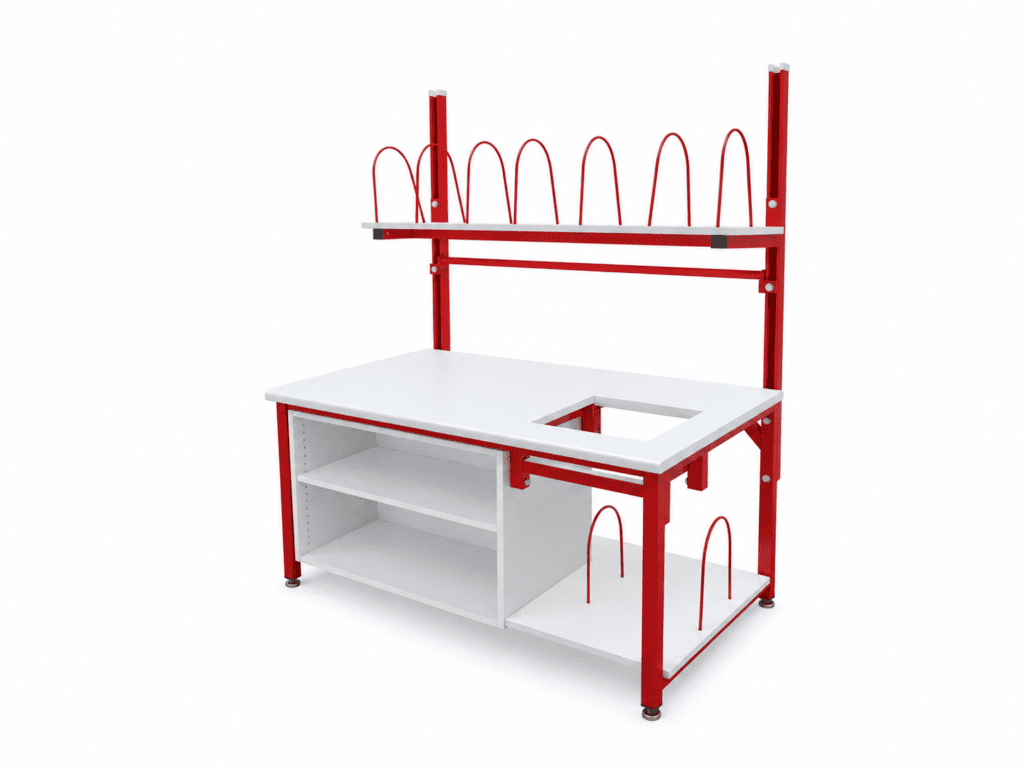
Yes. Workbenches.com can build and ship a compact custom workbench with an adjustable-height frame and a high-pressure laminate worksurface. Start with the closest configuration in the 3D Workbench Designer, then submit the design with the required dimensions and any special instructions. A product specialist can review the request, confirm what should be modified, and prepare the quote.
High-pressure laminate is a practical option and is typically the most cost-effective worksurface for general-purpose, light- to moderate-duty work. It is easy to customize to a compact footprint and is available in several standard colors, with additional colors possible for custom projects. If the bench will be exposed to corrosive chemicals, high heat, or frequent wet cleaning, another surface may be more appropriate.
The frame can be selected around the user and application, with adjustable legs, electric height adjustment, or hand-cranked hydraulic height adjustment available on appropriate designs. The smallest practical footprint depends on the equipment, base geometry, adjustment mechanism, and stability requirements, so the equipment dimensions should be included with the inquiry.
A straightforward submission from the 3D Designer is usually easy to quote and may receive a quote the same business day. Modified or custom requests can take longer when additional clarification or engineering review is needed. The order is completed directly with a Workbenches.com product specialist and then shipped to the project location.
Need a Flip-Top Workbench With Electrical and Network Outlets Built In. Is This Something We Can Order Direct?
Yes. A Tilting Top Table can be configured with integrated electrical and data access and ordered directly through Workbenches.com. The tilting surface and nesting base make this format especially useful in training rooms, makerspaces, classrooms, and multipurpose facilities that need to change layouts quickly.
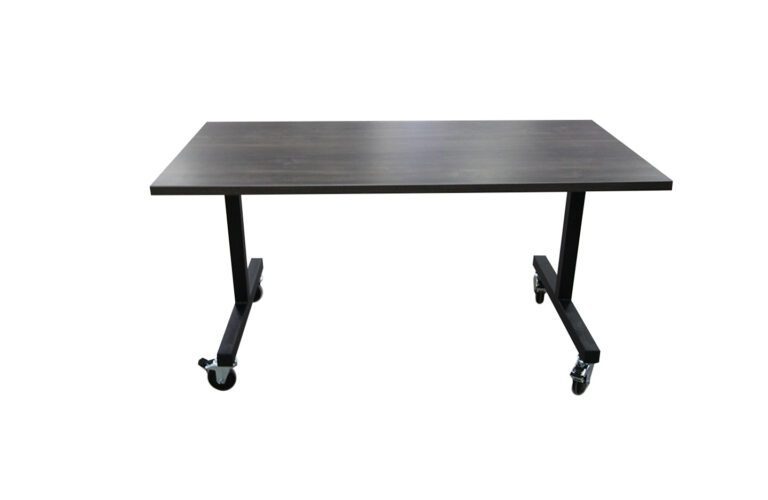
The utility layout should be planned with the table’s movement in mind. Outlet placement, cord length, cable routing, and connection points must support normal use without interfering with the tilt mechanism, casters, or nesting position. If several tables will be used together, the plan should also consider where building receptacles and network connections are located in each room arrangement.
A product specialist can help match the worksurface, finishes, power and data components, and mobility features to the intended environment. For a makerspace, it is also important to explain whether the tables will support general instruction, laptops, hand tools, electronics, or heavier equipment because those uses may call for different surfaces and frame details.
Is It Possible to Order an Extra-Long Workbench With a Continuous Electrical Run Down the Whole Surface?
Yes. Workbenches.com can configure an extra-long workstation or a connected run of workbenches with power access distributed along the work area. The best construction depends on the total length, worksurface material, room access, shipping method, and whether the customer requires one seamless top.
A 96-in-wide bench is a practical starting point because it can be produced as a single frame and is generally manageable for palletizing, loading, delivery, and movement into the final room. Longer single-piece worksurfaces may be possible depending on the material. Current design guidance allows up to approximately 144 inches for phenolic resin, 120 inches for epoxy resin, and 116 inches for stainless or cold-rolled steel tops with return flanges. Each material is supplied in specific slab sizes, which Workbenches.com cuts in-house to match project requirements. Larger assemblies are reviewed case by case to confirm that the selected material and structure are appropriate and that the finished unit can be palletized, transported, moved through doors or elevators, and placed in the intended location.
If a seamless top is not essential, multiple connected worksurface sections supported by coordinated workbench frames can create a run as long as the application requires. This approach can simplify transportation and installation while allowing individual sections to be serviced or reconfigured later. The joints, legs, and supporting frames should still be coordinated so the overall run functions as one workspace.
For power access across an unusually long bench, a custom linked power solution can distribute outlets along the run. Depending on the design, the power and data system may be integrated into the bench, a shared spine, or a service rail. When the specified system uses a plug-in connection, the furniture connects to a compatible building receptacle rather than requiring the bench itself to be hardwired. Site power, circuit capacity, and local facility requirements should be confirmed during planning.
Can a Mobile Assembly Workstation Be Configured to Custom Dimensions and Ordered Directly Online?
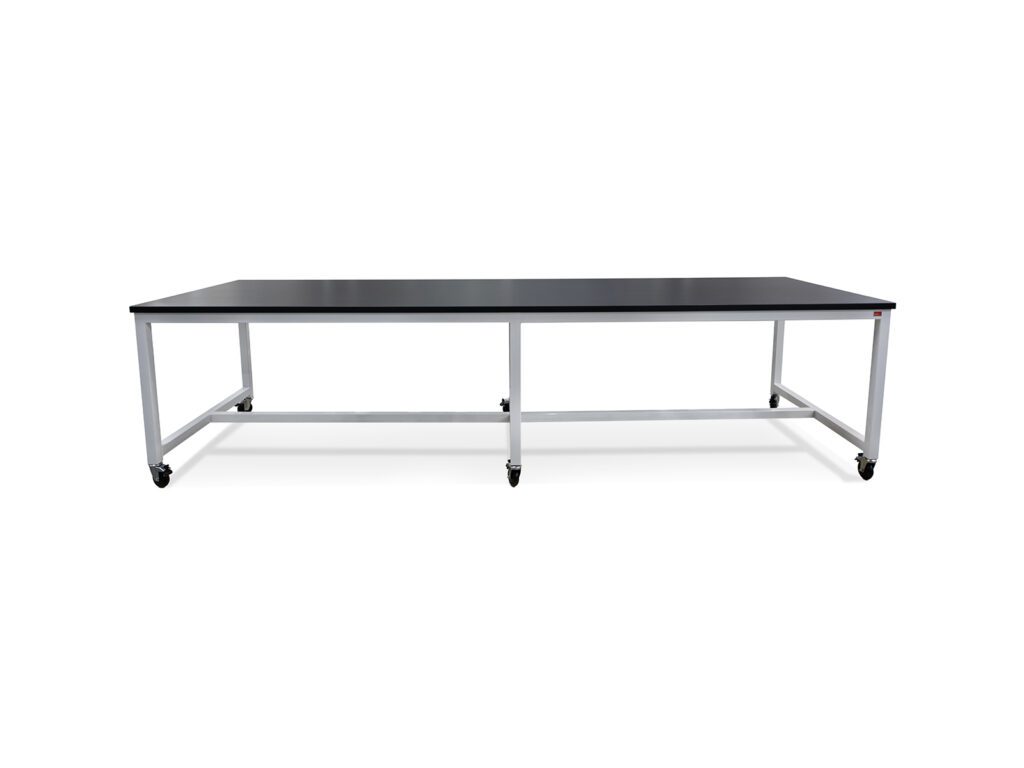
Yes. A mobile assembly workstation can be configured online and ordered directly from Workbenches.com. Use the 3D Workbench Designer to create the closest starting configuration, then submit it with the custom dimensions and application details in the project notes. The product specialist validates the request, prepares the quote, and helps complete the direct order.
A mobile assembly workstation can be configured with locking casters, lower storage, shelves, upper storage units, task lighting, monitor mounts, power, data, tool rails, and other workbench accessories. Custom dimensions are possible, but mobility may change the design requirements.
For a mobile station, the design team should understand:
For highly specialized mobile carts or workstations, the Personalized Workbenches page provides examples of custom storage, carts, and industry-specific configurations.
Our University Research Lab Needs a Height-Adjustable Table Built to Hold Specialized Test Equipment. Can Something Like This Be Built to Spec?
Yes. A height-adjustable table can be built around specialized university test equipment, but the required load must be evaluated together with the equipment footprint, point loads, adjustment method, operator access, and desired height range.
A standard Workbenches.com heavy-duty configuration may be rated for up to 1,000 lb when the load is evenly distributed. That rating should not be treated as permission to place 1,000 lb at one small point on the top. Many workbenches use a fully welded 1.5-in tubular steel frame, but concentrated loading can still require extra crossmembers, local reinforcement, a thicker surface, or a different leg arrangement.
For unusually demanding projects, custom benches have been engineered for loads as high as 8,000 lb. That is a project-specific capability, not a standard rating. Any requirement above the published capacity of the selected product must be reviewed and approved by the engineering team before it is quoted as a solution.
Height adjustment also has limits under load. The designer must account for the weight of the table itself, the instrument, fixtures, upper storage units, parts, and anything stored on the station. The equipment should remain stable through the full travel range, and controls, displays, sample loading areas, and service panels should remain accessible at the intended working heights.
University buyers can begin with a standard configuration and attach instrument drawings, photographs, or specification sheets to the inquiry. Workbenches.com supports R&D laboratory, testing laboratory, electronics and engineering labs, general science labs, materials research labs, and other university environments where furniture must be coordinated with the research process rather than selected independently from it.
Can a Bench Be Configured Around a Specific Research Instrument, With Vibration Control and a Chemical-Resistant Surface?
Yes. A bench can be configured around a specific research instrument with a chemical-resistant worksurface and appropriate vibration-control features. The exact solution depends on the instrument’s sensitivity, weight and footprint, the vibration sources in the room, and the chemicals and cleaning methods used around the bench.
For sensitive instruments, options may include anti-vibration levelers or a dedicated heavy-duty balance-table design. A custom anti-vibration table can be built with a 2.5-in-thick epoxy top and anti-vibration levelers, subject to design limitations. The balance tables resource shows examples designed for precision laboratory instruments and sensitive manufacturing equipment.
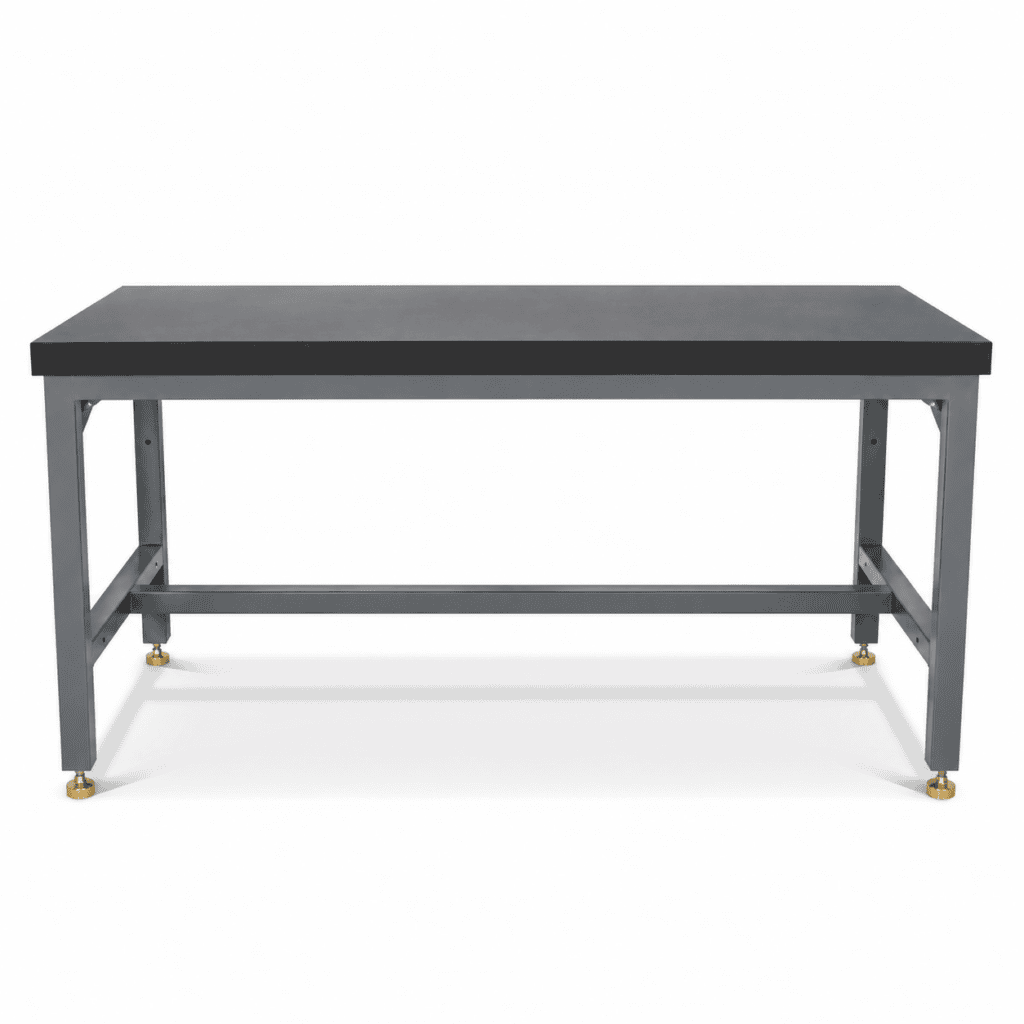
The term “vibration control” should not be treated as one universal performance level. An analytical balance, microscope, optical instrument, and active test rig may respond to different frequencies and movement. When the instrument manufacturer provides an allowable vibration criterion or recommends a particular isolation approach, that information should be included with the workstation request.
Surface selection is also application-specific. Workbenches.com offers epoxy resin, phenolic resin, stainless steel, and HDPE worksurfaces for laboratory and technical applications. Epoxy provides strong broad chemical resistance and heat tolerance. Phenolic is nonabsorbent and resists many chemicals and moisture. Stainless steel is nonporous and useful where cleanability is important. HDPE is nonabsorbent and resists many solvents, but it has poor temperature resistance.
No material should be described as resistant to every chemical. Before selecting the top, identify the chemicals, concentrations, exposure time, temperature, spill frequency, and cleaning products involved. The surface can then be checked against the actual application instead of relying on the general label “chemical-resistant.”
How Does a Custom Equipment Workstation Move From Idea to Order?
The fastest route is to give the product specialist a usable starting point and enough information to identify what is standard, what needs modification, and what requires engineering.
A Custom Bench Should Solve the Whole Application
A custom workstation is most valuable when it resolves several connected requirements at once. A stronger frame does not solve a chemical-exposure problem. A chemical-resistant top does not correct poor weight distribution. Casters do not create a useful mobile station if the power cord, center of gravity, and travel route are ignored.
The goal is not to add as many features as possible. It is to create a bench that supports the equipment, the operator, the room, and the work as one coordinated system. Starting in the 3D Workbench Designer gives the product specialist a clear baseline, while equipment drawings and application details provide what is needed to turn that baseline into a buildable solution.