Healthcare Workbenches
In healthcare environments, every detail matters. From sterile prep rooms to diagnostics labs, the right workbench can improve safety, workflow, and patient outcomes. At Workbenches.com, we design and manufacture high-performance healthcare workstations tailored to meet the strict hygiene standards, ergonomic needs, and functional demands of clinical and medical spaces. Whether for labs, pharmacy areas, or nurse stations, our workbenches deliver the durability, adaptability, and compliance today’s healthcare facilities require.
Want a safer, smarter clinical workspace? Contact our team to start your healthcare furniture project today.
Healthcare Workbenches & Casework: Built for Clinical Environments
Explore our most popular furniture solutions designed for healthcare facilities—from clinical labs to pharmacy spaces—engineered for hygiene, durability, and compliance.

Services Lab Bench
Designed with integrated gas, water, and electrical utilities —perfect for pharmacy compounding or lab prep areas.
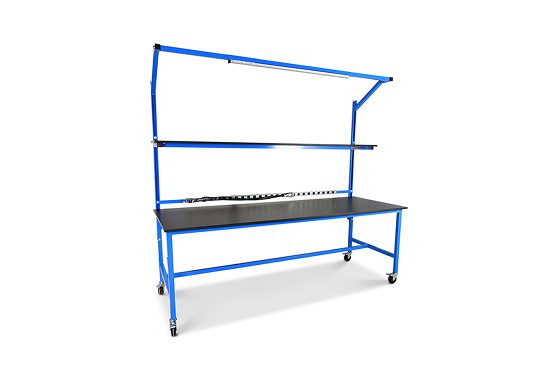
UpperDeck Workbench
Includes integrated shelving and overhead utilities for organized, space-saving clinical workstations.
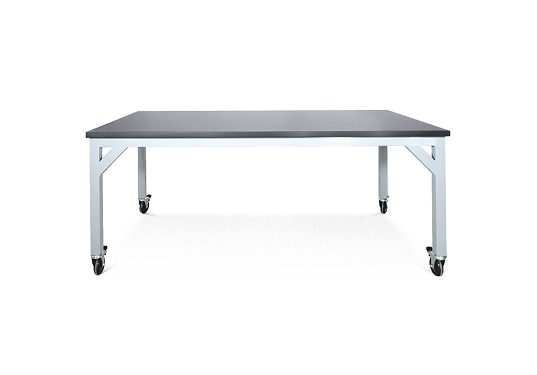
CoreBench
A versatile, durable workbench ideal for general healthcare tasks, offering customizable surfaces and optional storage.
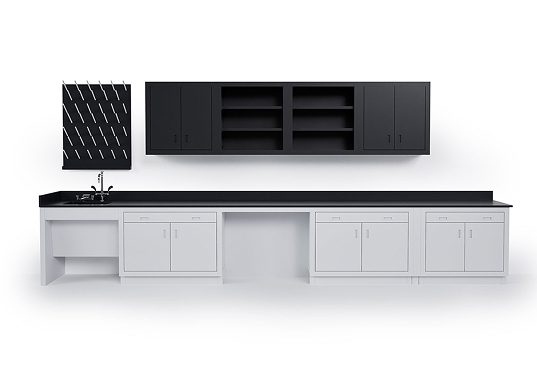
Modular Casework
Flexible, modular casework solutions that adapt to evolving healthcare facility needs.

Built-in Casework
Traditional fixed casework for permanent installations requiring seamless, long-term storage and organization.

Specialty Lab Cabinets
Designed for compliant storage of chemicals, medications, or hazardous materials in healthcare labs or pharmacies.
Types of Healthcare Furniture: Built for Compliance, Efficiency & Patient Care
Explore specialized workstations designed to support healthcare workflows, from lab diagnostics to pharmacy compounding.
Sample Processing Workstations
- Ergonomic configurations – Designed for clinical lab techs
- Integrated sinks – Supports specimen handling protocols
- Cleanable materials – Easy to disinfect for infection control

Hospital Pharmacy Workbenches
- Chemical-resistant surfaces – Ideal for compounding and medication prep
- Integrated utilities – Power, water, gas options available
- Optional storage – Add drawers, shelving, and cabinets

Mobile Diagnostic Stations
- Compact footprint – Built for point-of-care or mobile testing
- Equipment integration – Holds monitors, sample storage, testing devices
- Height-adjustable options – Improves technician comfort

Custom Medical Carts
- Specialized storage – Medication bins, instrument trays, specimen holders
- Smooth mobility – Built with quiet, hospital-grade casters
- Configurable accessories – Add shelves, drawers, or work surfaces

Instrument Prep Tables
- Sturdy construction – Ideal for prepping surgical tools or medical devices
- Easy-clean surfaces – Supports sterile prep workflows
- Optional shelving – Add storage for trays or supplies

Healthcare IT Workstations
- Technology-ready – Designed for computers, monitors, and printers
- Cable management – Keeps cords organized and safe
- Ergonomic design – Supports healthcare staff using EMR systems

Specimen Drop-Off Stations
- Dedicated intake area – Supports specimen labeling and processing
- Compact design – Fits in lab receiving zones
- Easy-access storage – Keeps forms, labels, and tools organized

Trends in Healthcare Workspace Design: Evolving with Modern Care Needs
Healthcare work environments continue to evolve—our workbenches are built to meet today’s leading trends:
- Modular & Adaptable Designs – Flexible setups that adjust as workflows and departments change.
- Infection Control Materials – Surfaces designed for easy cleaning and disinfection, supporting hygiene protocols.
- Integrated Technology Support – Workbenches that accommodate monitors, data connections, and diagnostic equipment.
- Ergonomic Improvements – Height-adjustable and user-friendly workstations that reduce staff strain and fatigue.
- Space Efficiency & Mobility – Mobile workstations and compact designs that optimize limited clinical spaces.
Healthcare Environments We Serve: Furniture Solutions for Every Clinical Setting
Clinical Laboratories
Supporting diagnostic testing, specimen processing, and medical research with hygienic, functional workstations.
Hospital Pharmacies
Workbenches and casework designed for safe medication preparation, compounding, and storage.
Outpatient Clinics
Flexible workstations for lab testing, specimen drop-off, and patient care areas.
Surgical Support Spaces
Instrument prep tables & sterile work surfaces for surgical suites and operating rooms.
Central Sterile Processing Departents (CSPD)
Benches & prep tables supporting medical instrument decontamination and sterilization workflows.
Healthcare IT & Admin Areas
Ergonomic computer workstations for electronic medical records (EMR) access and hospital data systems.
Customization Options: Tailoring Healthcare Furniture to Your Facility
Every healthcare environment is unique—our team can tailor each workbench for your specific needs:

- Material Choices – Options like chemical-resistant laminate, stainless steel, or antimicrobial surfaces.
- Integrated Utilities – Add gas valves, water taps, electrical outlets, or data ports.
- Storage Solutions – Configure drawers, shelving, or specialty cabinets for equipment, supplies, and medications.
- Mobility & Flexibility – Optional locking casters or adjustable feet for easy repositioning.
- Ergonomic Accessories – Include monitor arms, keyboard trays, and task lighting for staff comfort.
- Custom Dimensions – Tailor widths, depths, and heights to fit specific room layouts or compliance requirements.
Ready to design your healthcare workbench?
Contact us to get started with a custom solution.
Healthcare Workbenches: Common Questions
Healthcare casework can be constructed from powder-coated steel, stainless steel, or laminate-faced wood or engineered-wood components. The material and construction affect how the cabinets tolerate moisture, disinfectants, frequent cleaning, and long-term daily use.
Steel and stainless-steel casework avoid the exposed wood-based cores associated with traditional millwork. Stainless steel is particularly useful where frequent cleaning and moisture resistance are priorities. With laminate-faced cabinetry, seams, edges, and damaged areas require more attention because moisture can reach the underlying substrate if the protective surface is compromised.
Cleanability should therefore be evaluated across the entire cabinet—not just the visible finish—including seams, edges, hardware, joints, and compatibility with the facility’s approved cleaning products.
Start with surfaces and furniture construction that match the diagnostics area’s cleaning procedures, chemicals, moisture exposure, and daily workload. Nonporous worksurfaces such as phenolic resin or stainless steel can be strong starting points for many clinical applications, but compatibility should be verified against the facility’s actual disinfectants, reagents, and procedures.
Look beyond the worksurface as well. Storage, shelving, seating, hardware, seams, edges, and frequently touched components should be easy to access for cleaning and durable enough for repeated use. The workstation also needs to support the actual workflow, including instruments, specimen handling, supplies, power, storage, and waste processes.
Explore lab workstation solutions for clinical and diagnostic environments.
Furniture used in a clinical workspace should support the facility’s infection-control and cleaning protocols. Important considerations include nonporous or appropriately finished surfaces, compatibility with approved disinfectants, accessible surfaces for routine cleaning, and construction that minimizes difficult-to-clean seams, gaps, exposed cores, and other areas where contamination can collect.
Furniture layout matters too. Staff need sufficient clearance to clean around and beneath workstations, while storage should keep necessary supplies organized without unnecessarily cluttering the worksurface. Damaged surfaces, edges, coatings, and seals should be repaired because deterioration can make consistent cleaning more difficult.
Furniture does not create an infection-control program by itself. Materials and configurations should be selected to support the healthcare facility’s established cleaning, disinfection, and infection-prevention requirements.
Clinical lab casework should be planned around workflow, storage, cleaning requirements, utilities, equipment, and how permanent each part of the space needs to be. Start by identifying what will be stored, where staff need access to it, which instruments require dedicated locations, and where sinks, power, plumbing, or other utilities constrain the layout.
Material selection should reflect the lab’s disinfectants, chemicals, moisture, and frequency of cleaning. Construction details such as seams, edges, hardware, and exposed substrates also affect long-term cleanability and maintenance.
Facilities should also consider how the lab may change. Fixed casework can make sense for stable perimeter storage and permanent utility areas, while modular casework or workstations can provide greater flexibility in areas where equipment or workflows may evolve. Depending on the system, replaceable components can also make future repair, maintenance, and expansion easier.
Clinical lab furniture should follow the movement of specimens, supplies, staff, and information through the space. Start by mapping the sequence of work—from receiving and preparation through testing, analysis, storage, and disposal—then position workstations, instruments, supplies, and storage around that sequence.
Frequently used supplies should be accessible near the point of use, while equipment should have enough worksurface, clearance, power, and supporting storage for the task. Layouts should also avoid unnecessary crossing between clean supplies, specimens, waste, and high-traffic circulation wherever the facility’s procedures require separation.
The goal is to reduce unnecessary walking, reaching, searching, and specimen movement while preserving enough clearance for staff to work and for surfaces and equipment areas to be cleaned properly.
Healthcare and diagnostic labs often prioritize repeatable clinical workflows, specimen throughput, frequent cleaning and disinfection, and dependable access to instruments and supplies. Furniture needs to support standardized processes that may operate continuously or across multiple shifts, while materials must tolerate the facility’s established cleaning procedures.
Research labs can have more variability as instruments, researchers, grants, and experimental processes change. That often places greater emphasis on modularity and reconfiguration. Clinical environments still benefit from flexibility, but changes need to be balanced with consistent workflows, cleanability, equipment placement, and operational continuity.
In both settings, furniture should be specified around the actual process rather than the room label. The difference is often the degree of workflow standardization, cleaning frequency, throughput, and frequency of change.
Explore furniture solutions for healthcare and clinical environments.
Stainless steel and phenolic resin are strong starting points for many clinical environments because both provide nonporous, cleanable surfaces. Stainless steel is well suited to frequent cleaning and moisture exposure, while phenolic resin provides a practical laboratory surface with good moisture resistance and compatibility with many chemicals.
The best material still depends on the facility’s actual disinfectants, concentrations, contact times, cleaning frequency, chemicals, and equipment. Stainless steel can react with certain chemicals, and phenolic performance also varies by substance. Powder-coated steel can be durable for frames and cabinetry, but damaged coatings should be repaired.
Rather than relying on a general “easy-to-clean” or “chemical-resistant” claim, compare the material against the facility’s approved cleaning products and procedures before specifying it.
Start by determining whether the lab can close during renovation or whether testing must continue throughout the project. For hospitals and clinical labs that need to remain operational, furniture removal, construction, delivery, installation, utility connections, equipment moves, and temporary work areas may need to be coordinated in phases.
Each phase should define which area will be taken out of service, where affected work will temporarily move, how staff and materials will circulate around the work area, and when the completed space can return to operation. Installation access, staging, noise, dust, utilities, cleaning requirements, and downtime should also be considered as part of the plan.
Breaking the project into coordinated phases can allow completed areas to return to service before work begins in the next area, helping reduce the amount of laboratory space that is unavailable at one time. Furniture and installation planning should therefore be coordinated with the facility’s operating schedule from the beginning—not after the new layout has already been finalized.
Review installation requirements when planning a phased lab project.