Manufacturing Workbenches
In demanding manufacturing environments, the right workbench isn’t optional—it’s essential. At Workbenches.com, we design and build industrial-grade workbenches engineered for strength, durability, and workflow efficiency. Whether you need heavy-duty benches to support machinery, ergonomic workstations to improve operator comfort, or modular solutions that evolve with production needs, we provide robust, customizable furniture tailored to meet the rigorous demands of modern manufacturing.
Contact our product specialists to configure a workbench that supports your production goals.
Manufacturing Workbenches: Built for Strength & Versatility
Explore our core product offerings designed to support pharmaceutical operations with durability, compliance, and flexibility:
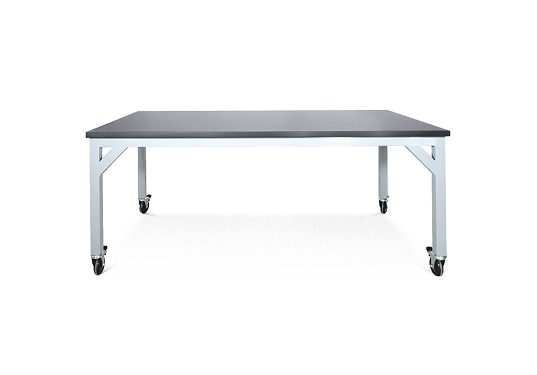
Core Bench
A durable, general-purpose industrial workbench with 1,000 lbs capacity, customizable with accessories and storage options.
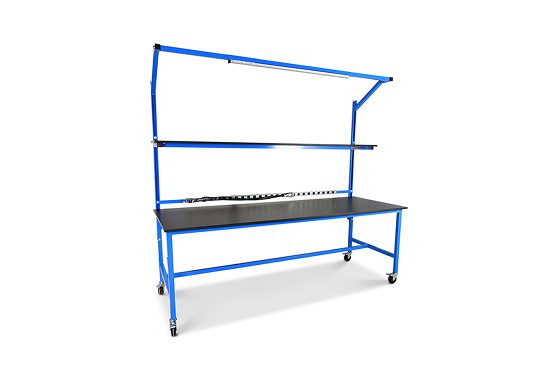
Upper Deck Workbench
Heavy-duty bench with integrated overhead shelving, ideal for assembly or packing stations needing vertical storage.
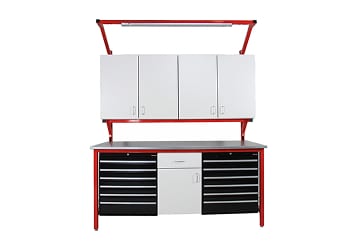
Utility Workbench
Robust bench with drawers, pegboards, and tool storage, perfect for maintenance, repair, or heavy-duty assembly tasks.
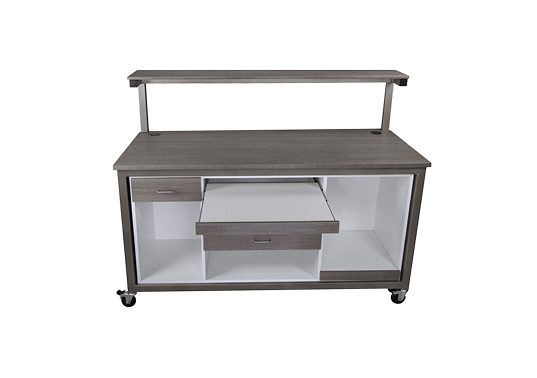
Personalized Workbenches
Fully custom-built benches tailored to unique production needs, processes, or specialized manufacturing applications
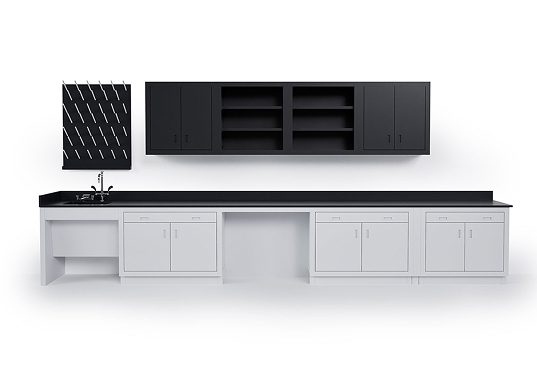
Modular Casework
Flexible, reconfigurable storage systems that adapt to evolving manufacturing workflows and equipment layouts.
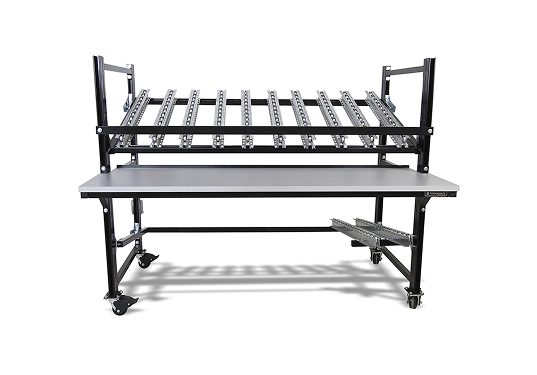
Industrial Storage Racks
Adjustable shelving designed to hold heavy parts, tools, and materials securely within industrial spaces.
Types of Manufacturing Furniture: Built for Strength, Precision & Workflow Efficiency
Explore specialized furniture solutions designed to support assembly, fabrication, material handling, and production workflows in industrial environments.
Heavy-Duty Workbenches
- Reinforced frames – Support high loads, machinery, and equipment.
- Durable tops – Impact- and chemical-resistant surfaces.
- Built for longevity – Designed for harsh industrial environments.
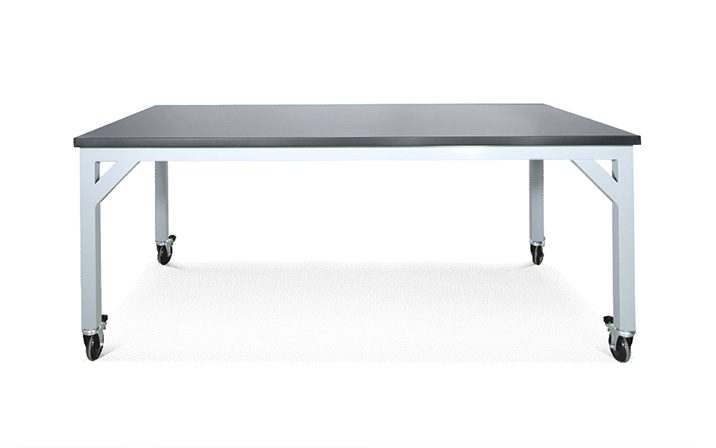
Light-Duty Manufacturing Workbenches
- Cost-effective – For assembly or inspection requiring lighter loads.
- Compact footprint – Ideal for limited space applications.
- Customizable – Add shelving, pegboards, or drawers.
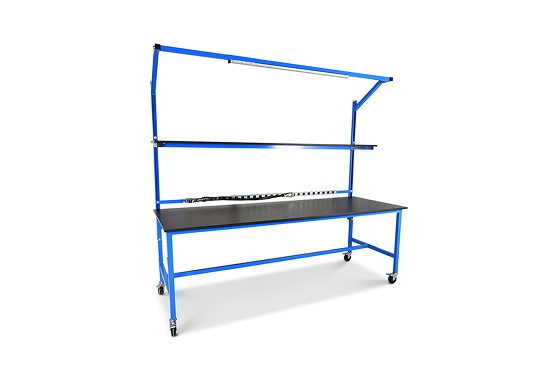
Assembly Line Tables
- Workflow-focused – Designed for repetitive assembly with bin rails or conveyors.
- Customizable tops – Optional cutouts or ball transfer inserts.
- Accessory-ready – Supports tool trolleys, lighting, or part bins.
Conveyor-Integrated Workstations
- Seamless material flow – Built-in conveyors to connect workstations.
- Reduces manual handling – Moves products along the line automatically.
- Improves productivity – Supports continuous assembly or packaging processes.
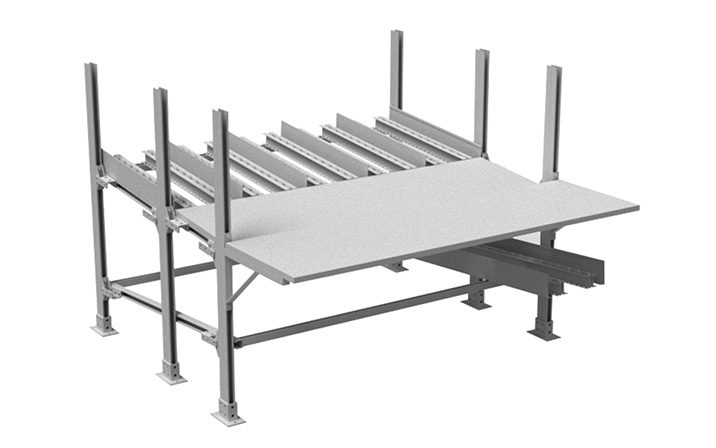
Flow Racks
- Gravity-fed system – Supports FIFO material flow.
- Space-saving – Maximizes storage density at the line.
- Integrates with conveyors – Easy loading/unloading of components
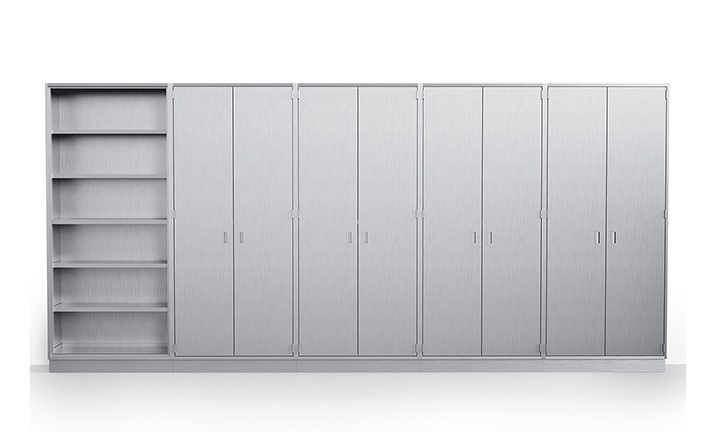
Tool Storage Cabinets
- Secure locking – Protects valuable tools and parts inventory.
- Adjustable shelving – Fits tools of various sizes.
- Integrated drawers – Organizes frequently used supplies.
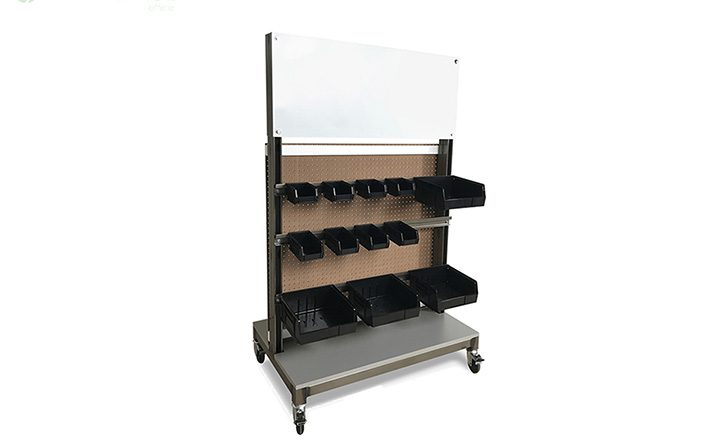
Material Handling Carts
- Heavy-duty casters – Easy transport of tools, parts, or components.
- Configurable – Add bins, shelving, or racks for organization.
- Mobile flexibility – Moves supplies across workstations efficiently.
Trends in Manufacturing Furniture Design: Evolving for Efficiency, Flexibility & Longevity
Explore emerging trends shaping manufacturing workspaces to improve productivity, worker safety, and adaptability for modern production needs.
- Lean Manufacturing Principles – Workbenches designed to support continuous improvement, minimize waste, and streamline workflows.
- Modular & Reconfigurable Layouts – Flexible setups that adapt to evolving production lines, reducing downtime for changeovers.
- Integration with Automation – Furniture built to interface with conveyor systems, robotics, sensors, and automated equipment.
- Ergonomic Design Focus – Height-adjustable benches and supportive accessories to reduce worker fatigue and repetitive strain.
- Durability & Industrial Longevity – Heavy-duty materials and reinforced structures designed for high-impact, long-term industrial use.
- Technology Integration – Integrated power outlets, monitor arms, and cable management to support digital tools and production monitoring.
Environments We Serve: Supporting Manufacturing from Floor to Finish
Aerospace Production Facilities
Heavy-duty benches for precision component assembly, inspection, and testing.
Automotive Manufacturing
Workstations for assembly, inspection, repair, and parts fabrication in automotive plants.
Medical Device Manufacturing
Specialized benches for assembling, testing, and packaging precision medical equipment.
Electronics Assembly Lines
Specialized workbenches supporting circuit board assembly and device manufacturing.
Defense & Military Production
Rugged workstations built for tactical equipment assembly and maintenance.
Maintenance & Repair Shops
Utility benches designed for equipment repair, tool maintenance, and part servicing.
Heavy Equipment Manufacturing
Durable benches supporting large component assembly and maintenance operations.
Metal Fabrication Shops
Workbenches for welding, cutting, grinding, and metal part assembly.
Customization Options: Tailored Solutions for Every Manufacturing Environment
Explore customization options to build a workbench system that aligns with your unique production, storage, and workflow requirements.
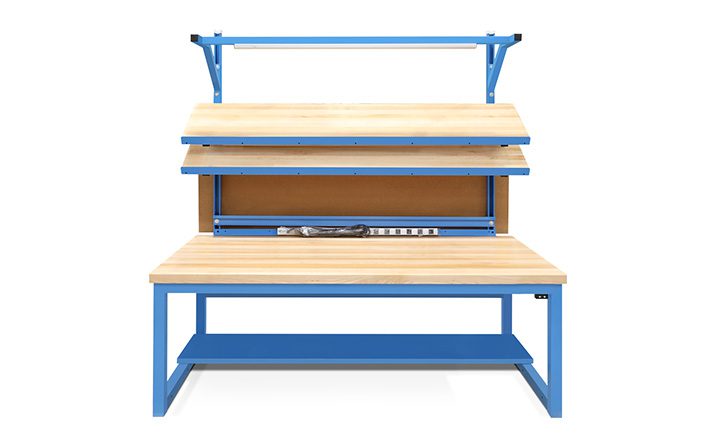
- Worksurface Choices – Select from stainless steel, phenolic, HDPE, hardwood, or laminate tops based on application needs.
- Storage Integration – Add drawers, shelves, pegboards, or cabinets for organized tool and material access.
- Accessory Add-Ons – Include bin rails, tool trolleys, louvered panels, or lighting for improved functionality.
- Conveyor System Integration – Customize workbenches to connect with conveyors for seamless material handling.
- Mobility Enhancements – Optional heavy-duty locking casters to move benches or equipment as needed.
- Personalized Configurations – Modify dimensions, weight capacities, or layouts to fit specific processes or facility constraints.
Contact our team to start designing a manufacturing workbench system tailored to your production goals and facility requirements.
Manufacturing Workbenches: Common Questions
For equipment that generates vibration, look beyond load capacity alone. The workbench needs a rigid frame, stable footprint, appropriate worksurface, and enough capacity for both the equipment and everything else the bench will support. Equipment placement also matters; concentrated loads, operating forces, mounting requirements, and the manufacturer’s installation specifications should all be considered before selecting the bench. Workbenches.com can modify dimensions, layouts, and weight capacities for specialized manufacturing applications when a standard configuration is not appropriate. For CNC equipment or other machinery that produces significant vibration, provide the equipment specifications so the workstation can be evaluated for the application. Talk to a product specialist about an equipment-specific workstation.
Phenolic and stainless steel worksurfaces serve different manufacturing needs. Phenolic surfaces offer strong resistance to many chemicals and moisture and provide a smooth, nonporous work area, making them useful where chemical exposure or frequent cleaning is a concern. Stainless steel provides a durable, easy-to-clean surface with strong resistance to moisture, corrosion, and many demanding industrial conditions. Neither material is automatically the best choice for every heavy-manufacturing application; impact, heat, chemicals, equipment mounting, cleaning requirements, and the type of work being performed should determine the surface. Compare available workbench worksurfaces and their applications.
Choose a workbench with enough capacity for the combined weight of tools, equipment, fixtures, parts, and materials, with additional capacity for how the bench will actually be used. Workbenches.com CoreBench workbenches have a standard 1,000-lb capacity, which provides a strong starting point for many industrial and machine-shop applications. Heavier machinery, concentrated loads, presses, or unusual operating forces may require a modified or higher-capacity configuration rather than simply selecting a bench based on total weight. If your equipment approaches or exceeds the standard capacity, provide its specifications so the application can be evaluated before ordering. Explore heavy-duty workbench options for manufacturing.
Yes. Workbenches.com can modify workstation dimensions and layouts for production applications that do not fit standard bench sizes. For an extra-long assembly workstation, the overall length, required height-adjustment range, load, number of operators, equipment, utilities, and how material moves through the line should all be considered together. Depending on the application, a long continuous surface or a coordinated series of workstations may provide the better solution. Share the required dimensions and production requirements so the configuration can be developed around the line rather than forcing the process to fit a standard-size bench. Talk to a product specialist about a modified production workstation.
Bench vises, small presses, and similar equipment can often be mounted to an industrial workbench, but the equipment load, mounting pattern, operating forces, worksurface construction, reinforcement, attachment method, and frame capacity need to be considered together. For machine-shop and mechanical work, hardwood can provide a forgiving surface that absorbs impact and supports many clamping and assembly tasks, while powder-coated steel provides a hard, nonabsorbent surface suited to demanding industrial work. Neither material alone determines whether equipment can be mounted safely. Before permanently mounting a vise, press, or other equipment, confirm the equipment manufacturer’s installation requirements and that the complete bench configuration can support the application. Compare workbench materials for mounted equipment and heavy-duty applications.
A workbench for heavy manufacturing needs to combine load capacity, structural stability, an application-appropriate worksurface, and the ability to support the tools and equipment used in the process. Workbenches.com CoreBench workbenches provide a standard 1,000-lb capacity, while configurations can be modified when an application requires different dimensions, layouts, or weight capacities. Storage, power, lighting, tool organization, mobility, and other accessories should then be selected around the operator and workflow. The best heavy-duty workstation is not simply the strongest bench available; it is one designed around the loads, equipment, environment, and production task it needs to support. Explore heavy-duty workbench solutions for manufacturing.
Assembly workstations improve efficiency by putting parts, tools, instructions, power, and equipment where operators need them while reducing unnecessary reaching, walking, and material handling. Shelving, bin rails, drawers, lighting, tool storage, and other accessories can be positioned around the sequence of work rather than added wherever space is available. Workstations can also integrate with conveyors and flow racks to support continuous material movement and keep components replenished at the point of use. A well-planned workstation supports a repeatable process while making it easier for operators to access what they need without interrupting production. Explore assembly furniture solutions for production environments.
An ergonomic industrial workstation should help operators maintain comfortable working positions while keeping frequently used tools, materials, and equipment within easy reach. Key features can include appropriate working height, height adjustment, correctly positioned shelving and storage, monitor placement, task lighting, and accessible power.
Height adjustment is especially valuable in multi-shift manufacturing environments, where the same workstation may be used by operators of different heights throughout the day. Adjustable-height workbenches allow each operator to set the worksurface for the task and their working position rather than relying on one fixed height for every shift. They can also support changes between seated and standing work or between tasks with different height requirements. Accessories should be positioned around the operator’s normal work zone to help reduce excessive reaching, bending, and awkward movement. Explore height-adjustable options for industrial workstations.
The choice between a standard-duty and heavy-duty workbench should be based on what the workstation needs to support and how it will be used. Consider the combined weight of equipment, tools, fixtures, parts, and materials, along with concentrated loads, mounted equipment, impact, vibration, and other forces created during normal operation.
A standard configuration may be appropriate for lighter assembly, inspection, packaging, and general technical work. Heavy-duty applications involving machinery, presses, substantial loads, vibration, or demanding mechanical work may require a more rigid frame or higher-capacity configuration.
Workbenches.com CoreBench workbenches have a standard capacity of up to 1,000 lbs. Applications approaching or exceeding that capacity, or involving significant operating forces, should be evaluated based on the complete application rather than equipment weight alone.
Explore CoreBench: See specifications and options for our heavy-duty workbench platform.
Industrial workstations can help reduce fatigue by bringing the work to a more comfortable position and reducing unnecessary reaching, bending, walking, and material handling throughout the shift. Appropriate bench height is the starting point, with height-adjustable configurations providing additional flexibility for different operators, tasks, or seated-to-standing work. Frequently used tools, parts, displays, and supplies should be positioned within easy reach, while lighting and organized storage can reduce unnecessary movement. For repetitive production tasks, small improvements in workstation height and component placement can make a meaningful difference because the same motions may be performed hundreds of times during a shift. Explore height-adjustable workstation options for manufacturing.
Plan workstation layouts around the sequence of operations and movement of people, parts, tools, and finished products through the line. Start by mapping each production step, the equipment and materials required, operator positions, cycle requirements, and how components enter and leave each station. From there, determine bench dimensions, working heights, storage, utilities, material presentation, and required clearances. Conveyor-integrated workstations, flow racks, and point-of-use storage can help support continuous material flow and reduce unnecessary handling where appropriate. Planning the workstations around the process before finalizing individual benches helps avoid creating isolated stations that do not work efficiently as a complete line. Explore assembly furniture solutions for production-line planning.
The service life of an industrial workbench depends on how well its frame, worksurface, hardware, and accessories match the environment and daily workload. Repeated overloading, impact, vibration, chemical exposure, moisture, heat, and abrasive processes can shorten the life of furniture that was not specified for those conditions. Worksurface selection is particularly important because the frame and top may face very different types of wear. Maintenance also matters: periodically inspect fasteners, casters, moving components, electrical accessories, and surfaces, and address damage before it affects other parts of the workstation. Choosing a bench around the actual process—and allowing for foreseeable changes in equipment or loads—helps maximize its useful life. Explore industrial workbenches built for manufacturing environments.