Life Sciences Workbenches
At Workbenches.com, we build workbenches engineered to meet the rigorous demands of life sciences research and development. From biotechnology labs to pharmaceutical testing facilities, our durable, modular lab benches are designed for chemical resistance, ergonomic performance, and seamless integration of utilities. Whether outfitting a new lab or upgrading an existing space, we help create flexible, compliant work environments that support scientific discovery.
Ready to design a workbench tailored to your life sciences application? Contact our product specialists to get started.
Furnishing the Life Sciences Lab: Essential Benches & Casework
Explore our core furniture solutions designed for pharmaceutical, biotech, and research labs, built for durability, chemical resistance, and flexibility in demanding life sciences environments.

Services Lab Bench
Designed with built-in utilities like gas, water, and electrical access for wet labs or experiments requiring integrated services.
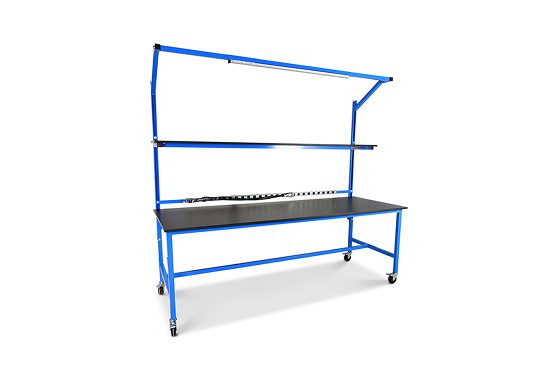
UpperDeck Workbench
Integrates shelving, lighting, and utilities above the work surface— perfect for labs needing vertical storage and organized workflow.
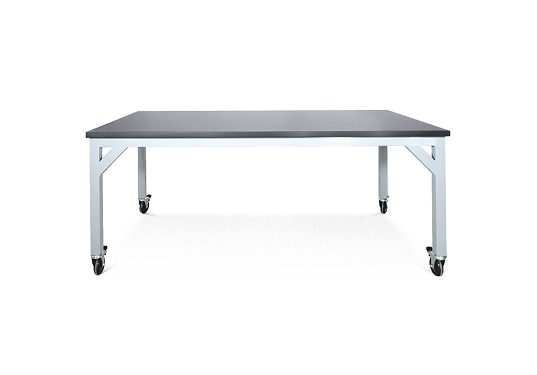
CoreBench
A versatile, heavy-duty workbench ideal for general lab tasks, experiments, or prep areas. Durable and customizable for daily lab use.
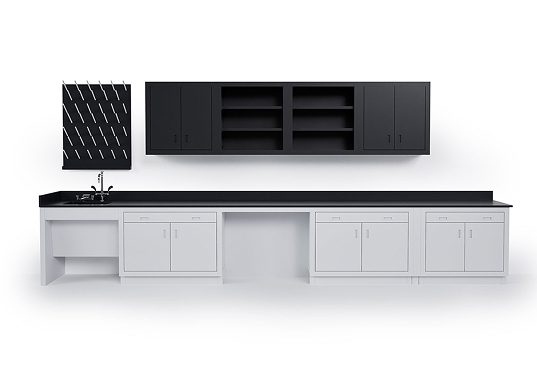
Modular Casework
Flexible, reconfigurable casework system ideal for labs that may evolve or relocate. Offers fast installation and adaptability over time.

Built-in Casework
Traditional fixed casework solution for permanent lab installations, offering seamless, long-term storage and workspace integration.

Specialty Lab Cabinets
Chemical storage, flammable material cabinets, acid cabinets, and other specialty solutions designed for laboratory compliance and safety.
Types of Life Sciences Furniture: Built for Research, Safety & Precision
Explore specialized furniture designed to support the demanding workflows of life sciences labs—from data analysis to specimen handling and chemical processing.
Clinical Data Workstations
- Ergonomic design – Supports long data entry and analysis sessions
- Integrated monitor arms – Optimizes multi-screen setups
- Power & data options – Keeps lab tech connected

R&D Lab Workbenches
- Flexible modularity – Easily adapts to evolving research
- Equipment-friendly surfaces – Supports lab instruments
- Collaborative layouts – Configurable for team or solo work

Microscope Tables
- Anti-vibration surfaces – Reduces disruption during microscopy
- Stable construction – Maintains imaging precision
- Compact footprint – Fits specialized imaging rooms

Laboratory Balance Tables
- Vibration-dampening tops – Ensures accurate weighing
- Heavy, stable base – Minimizes external movement
- Supports precision balances – Ideal for analytical labs

Specimen & Sample Carts
Mobile storage – Safely transports samples between stations
Durable materials – Stainless steel or powder-coated frames
Custom shelving – Configurable containment options

Chemical Storage Cabinets
Lab safety compliant – Stores acids, solvents, flammables
Material-specific options – Acid-resistant, flammable-rated
Lockable designs – Secures hazardous materials

Fume Hoods
- Ventilated safety – Controls hazardous fumes
- Operator protection – Shields user from exposure
- Casework integration – Seamless lab installation

Cleanroom Workbenches
- Smooth, non-porous surfaces – Supports controlled environments
- Cleanroom-rated materials – For ISO-classified labs
- Modular configurations – Flexible for evolving cleanroom setups

Trends in Life Sciences Laboratory Design: Evolving with Innovation
Life sciences labs are rapidly evolving to meet the demands of cutting-edge research, shifting workflows, and new technologies. Our workbenches are built to support these trends:
- Flexible Lab Layouts – Modular furniture systems that adapt as research needs change.
- Integrated Utilities – Benches equipped with power, gas, and water to support specialized equipment.
- Ergonomic & Height-Adjustable Designs – Supporting technician comfort with sit-to-stand workstations.
- Sustainable Materials – Growing demand for durable, eco-friendly surfaces and components.
- Collaborative Workspaces – Furniture that promotes teamwork across research teams and departments.
- Technology Integration – Accommodating data systems, monitor arms, and instrument connections directly into the workstation.

Designed for Life Sciences Labs: Supporting Your Research Space
Biotechnology Labs
Focused on genetic engineering, molecular biology, and applied research.
Pharmaceutical R&D Labs
Drug discovery, formulation, and testing environments requiring modular, chemical-resistant workbenches.
Clinical Research Labs
Supporting human and animal clinical trials, specimen processing, and diagnostics.
Microbiology Labs
Dedicated to microbial analysis, pathogen testing, and contamination control.
Genomics & Proteomics Labs
High-tech labs processing DNA, RNA, and protein analysis workflows.
Cell & Tissue Culture Labs
Spaces for culturing cells with sterile, easy-to-sanitize work surfaces.
Environmental Biology Labs
Supporting research into ecosystems, water/soil microbiota, and biological monitoring in environmental contexts.
Biochemistry Labs
Focused on biochemical processes, enzyme reactions, and molecular testing.
Customization Options: Tailored Solutions for Your Research Workflow
Every life sciences lab is unique. That’s why we offer tailored customization options to meet specific research needs:

- Materials & Finishes – Choose chemical-resistant, antimicrobial, or cleanroom-compatible surfaces.
- Utility Integration – Add gas valves, water fixtures, power strips, or data ports as needed.
- Modular Casework Solutions – Combine modular or fixed casework with your workbench setup.
- Specialty Storage – Include flammable or acid cabinets, shelving, drawers, and mobile storage.
- Ergonomic Accessories – Monitor arms, keyboard trays, footrests, and task lighting for researcher comfort.
- Custom Dimensions & Layouts – Configure sizes, heights, and footprints to fit your lab’s space and workflow.
Want to customize a lab solution?
Contact us to configure your perfect workbench and casework setup.
Life Sciences Workbenches: Common Questions
The choice between fixed casework and modular benching depends on what needs to stay permanent and what may change as the lab evolves. Fixed casework can make sense for areas tied closely to plumbing, sinks, utilities, or a permanent room layout. Modular benching is better suited to areas where instruments, workflows, researchers, or space requirements are likely to change.
Many analytical labs benefit from using both: fixed elements where permanent services make them practical and modular workstations for instrument, preparation, testing, and general work areas. Before specifying furniture, map the equipment, utilities, storage, workflow, and anticipated changes for each part of the lab rather than choosing one furniture type for the entire room. Explore lab bench solutions for analytical and research environments.
A modular lab bench gives a growing research lab the ability to change individual workstations without redesigning the entire space. Storage, shelving, power, monitor mounts, and other accessories can be added or repositioned as researchers, instruments, and processes change. Benches can also be relocated or reconfigured when teams expand or space is reassigned.
That can be particularly valuable in R&D environments where the work being performed two or three years from now may be different from the work being performed today. Instead of designing every station around one permanent use, the furniture becomes an adaptable platform that can support the lab as research priorities evolve. Explore configurable lab bench solutions.
For labs where instruments change regularly, start with a modular bench platform that is not designed around only one piece of equipment. Consider the size and weight range of current and likely future instruments, then provide enough worksurface capacity, accessible power, and flexible storage and shelving to accommodate changes.
Mobile or independently movable benches can make equipment changes easier, while adjustable shelving and accessories allow the space above and below the worksurface to be reorganized without replacing the bench. For large or specialized instruments, dedicated equipment stations can be combined with more flexible general-purpose benches rather than making every workstation equipment-specific. Configure a lab workstation around your equipment in the 3D Workbench Designer.
Epoxy resin and phenolic resin are common starting points for wet labs, but the right choice depends on the actual chemicals, concentrations, temperatures, contact times, and cleaning procedures used in the lab. Epoxy resin is generally the stronger starting point for frequent exposure to aggressive chemicals or higher temperatures. Phenolic resin provides a nonporous, easy-to-clean option for many labs with more moderate chemical and heat exposure.
No worksurface should be selected based only on a broad “chemical-resistant” label. Compare the lab’s reagent and cleaning-agent list against current manufacturer compatibility data before finalizing the material. Compare worksurface materials and their chemical, heat, and cleaning characteristics in Workbench Materials Compared.
A 24/7 lab should be specified for continuous shared use rather than a single user or shift. Prioritize durable frames, worksurfaces compatible with the lab’s chemicals and cleaning procedures, accessible storage, task lighting, power, and components that can withstand frequent adjustment and daily use.
Height-adjustable workstations can be particularly useful in multi-shift labs because different operators can set the bench to a comfortable working height rather than sharing one fixed setup. Storage and accessories should also be arranged so supplies can be replenished and equipment accessed without disrupting the next shift. Consider maintenance and replacement needs as well, since taking a workstation out of service can be more disruptive in a lab that never closes. Explore height-adjustable and workstation accessory options for multi-shift environments.
One of the biggest lab-planning mistakes is designing the furniture around today’s equipment without considering how the lab may change. Other common issues include underestimating storage, selecting worksurfaces before evaluating chemicals and cleaning procedures, overlooking equipment loads and clearances, and finalizing furniture before power and other utility requirements are understood.
Another mistake is treating every part of the lab the same. Instrument areas, wet work, computer-based analysis, sample preparation, and general work can have very different furniture requirements. Define the activities and equipment by zone first, then select furniture around each function while maintaining a consistent overall system where practical. Explore lab bench solutions for planning a new laboratory.
Fixed casework is designed for areas where the layout, storage, and function are expected to remain stable, such as permanent perimeter storage, dedicated equipment locations, or areas tied closely to utilities. Modular lab furniture uses independent benches, storage, shelving, and other components that can be moved, expanded, or reconfigured as equipment, researchers, and workflows change.
There is also a middle ground. Modular casework can provide the organized storage and appearance of casework while using replaceable components and an expandable frame system that can make future changes or repairs easier. Many labs ultimately use a hybrid approach: fixed elements where permanence adds value and modular furniture where change is more likely. Compare modular workbenches, modular casework, and fixed casework in the article “Modular Workbenches vs Fixed Casework: How to Choose the Right Workspace”.
Modern lab furniture should be configured around the work being performed rather than a fixed checklist of features. Depending on the application, that can include appropriate worksurface materials, adjustable height, integrated power and data, task lighting, shelving, drawers or cabinets, monitor mounts, equipment support, and organized storage for frequently used supplies.
The furniture should also make future changes practical. Modular storage and accessories can allow a workstation to evolve as instruments and processes change, while mobile configurations can support labs that regularly reorganize space. Features involving ESD control, chemical exposure, cleanability, or specialized equipment should be selected around the specific requirements of the process rather than added as generic upgrades. Explore lab workstation accessories and configuration options.
Before renovating an existing lab, document what must remain, what needs to change, and which existing conditions will constrain the new layout. Verify room dimensions, utilities, doors and access paths, fixed equipment, plumbing, electrical service, ventilation requirements, and any furniture or equipment that will be reused.
Just as important, determine how the renovation will fit around laboratory operations. Can the lab close during renovation and installation, or does testing and research need to continue? If the lab must remain operational, the project may need to be divided into phases so individual areas can be cleared, renovated, installed, and returned to service while work continues elsewhere.
Plan equipment moves, temporary work areas, utility connections, delivery routes, installation access, staging, and expected downtime before work begins. Phased installation can help limit disruption by concentrating work in one area at a time while other parts of the lab remain operational.
Review installation requirements when planning your project:https://workbenches.com/help-center/install-my-product/
Growing biotech companies should plan the initial lab around a repeatable furniture platform that can expand without requiring every future workstation to be redesigned. Standardizing common bench dimensions, worksurfaces, storage, and accessories can make it easier to add workstations as headcount grows, while modular components allow individual teams to adapt their setups to different research needs.
Also consider where additional benches could physically go, how future equipment will affect power and utilities, and whether storage can expand without consuming critical worksurface or floor space. Planning in phases can help the furniture investment follow actual growth while maintaining consistency as the company moves from early research into larger teams and additional programs.
Depending on the furniture system, replaceable or serviceable components can also make it easier to maintain, repair, or update an expanding installation without replacing complete workstations. Explore flexible furniture solutions for growing life science and R&D labs.
Wet lab furniture is typically selected around chemical exposure, liquids, frequent cleaning, and processes that may require sinks or other utilities. Worksurface selection is especially important: epoxy or phenolic resin may be appropriate depending on the chemicals, heat, and procedures involved, while storage and furniture materials should also tolerate the expected environment.
Dry labs are more likely to prioritize computers, analytical instruments, electronics, monitors, power and data access, and ergonomic workstation layouts. ESD protection may also be required when static-sensitive electronics are handled.
Because many R&D facilities include both wet and dry work, furniture should be specified by activity rather than applying one material or configuration throughout the entire lab. Compare worksurface and frame materials for different laboratory applications in Workbench Materials Compared: How to Choose the Right Worksurface and Frame.
Flexibility matters because research environments rarely stay exactly as they were when the furniture was purchased. Instruments change, teams grow, grants and research priorities shift, and new processes can introduce different storage, utility, or workspace requirements. Furniture that can be reconfigured allows the workspace to respond to those changes without replacing the entire installation.
Flexibility can come from modular benches, movable storage, adjustable shelving, height adjustment, mobile configurations, and accessories that can be added or repositioned. Depending on the product line, modular construction may also make maintenance and repair easier by allowing individual components to be serviced or replaced instead of replacing the complete workstation.
The goal is not to make everything movable or modular. It is to use permanent furniture where stability adds value and preserve adaptability where the lab is likely to change. Learn how to balance modular workbenches, fixed casework, and hybrid layouts in Modular Workbenches vs. Fixed Casework: How to Choose the Right Workspace.