R&D Lab Workbenches
Research and development laboratories are where ideas become data, hypotheses turn into breakthroughs, and new products are validated before entering the world. From pharmaceutical formulation and microbiology to cleanroom development, food science, and academic innovation labs, R&D environments demand workstations that support experimentation, adaptability, safety, and precision.
Our R&D lab workbenches are designed to serve as the foundation of discovery — enabling scientists, engineers, and researchers to work confidently across changing protocols, evolving equipment, and interdisciplinary collaboration.
Designing a lab where discovery happens? Our specialists can help build a workstation strategy that evolves with your research.
Why R&D Lab Workbenches Matter
Unlike production or clinical labs, R&D spaces are defined by uncertainty, iteration, and exploration. Workbenches must support frequent changes in equipment, processes, and research focus — without compromising safety or performance.
Purpose-built R&D lab workbenches help organizations:
- Support scientific experimentation and innovation
- Adapt quickly to new research directions and technologies
- Safely manage chemical, biological, or particulate risks
- Enable cross-disciplinary collaboration in shared lab spaces
- Maintain precision, cleanliness, and documentation accuracy
- Scale research from early discovery to validation stages
Recommended R&D Lab Workbench Solutions: Built for Scientific Discovery, Innovation & Experimental Research
These Workbenches.com solutions support electronics assembly, testing, inspection, and kitting workflows. ESD-safe configurations are available where static control is required.
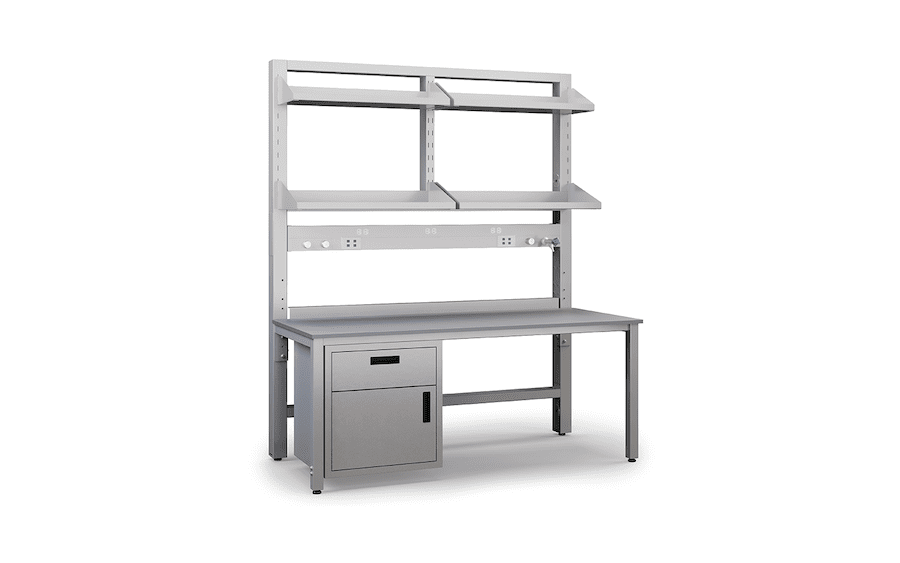
Services Lab Bench
Utility-ready lab bench designed for chemical handling, formulation work, sample preparation, and experimental research protocols.
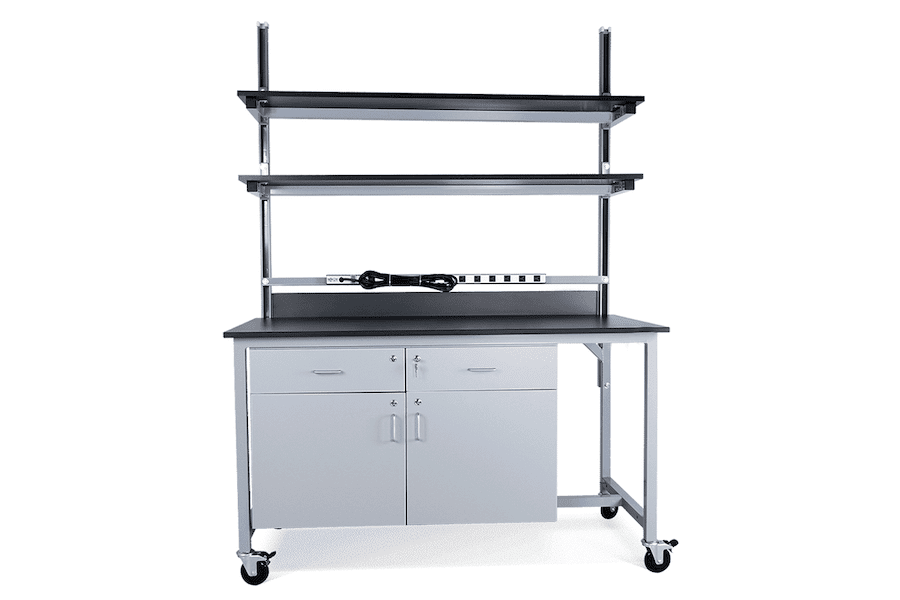
Upperdeck Workbench
Enhanced bench system with overhead storage and lighting — well-suited for equipment-heavy research, documentation, and analytical work.
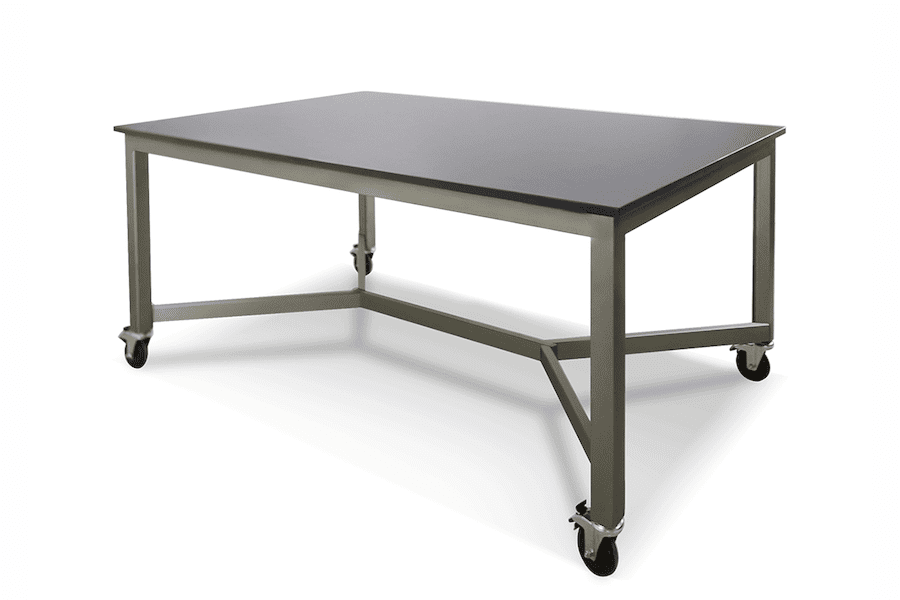
Corebench
A flexible research bench platform ideal for experimental setups, prototype testing, and evolving research workflows across disciplines.
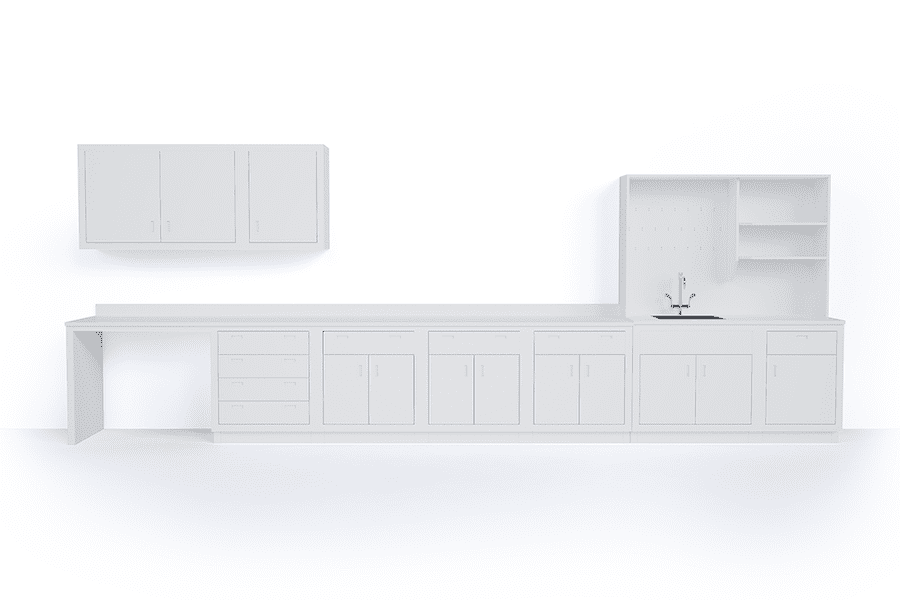
Modular Casework
Reconfigurable casework systems that provide organized storage for reagents, samples, tools, and research documentation.
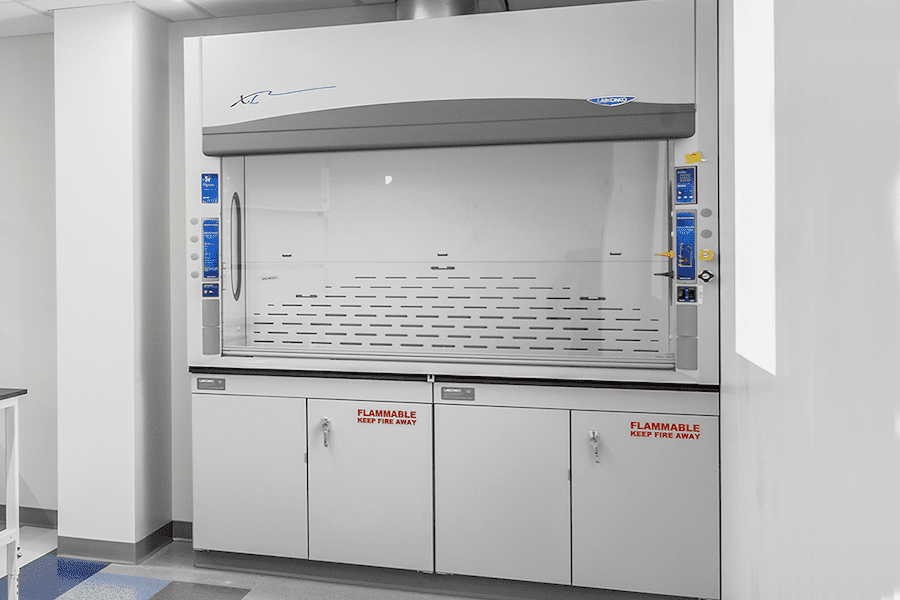
Lab Hoods
Containment solutions designed to protect researchers during chemical, biological, or particulate-based research while supporting safe experimentation.
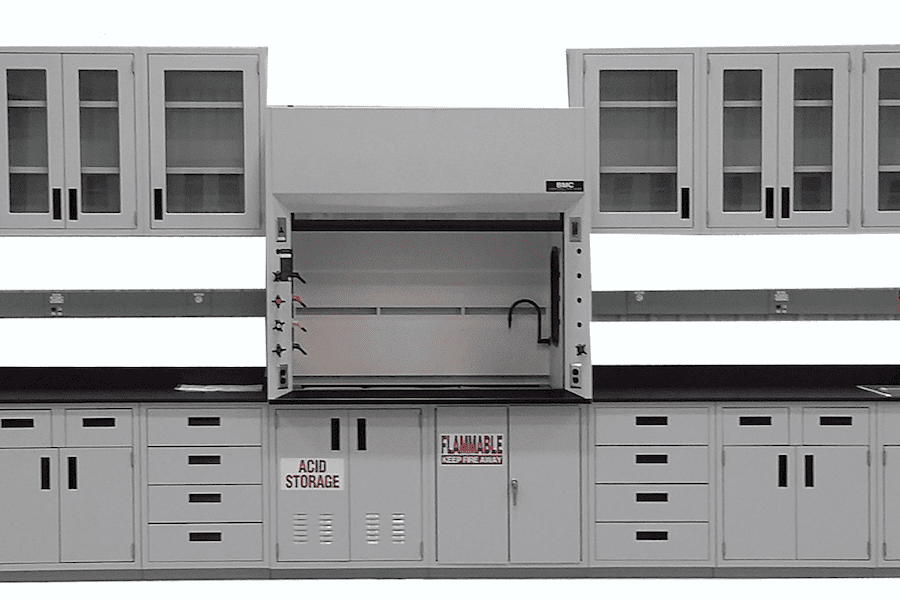
Specialty Lab Cabinets
Purpose-built storage cabinets designed for safe, organized storage of chemicals, samples, hazardous materials, and lab supplies in R&D environments.
Key Features of R&D Lab Workbenches
R&D labs require furniture that can evolve alongside research. These features enable long-term flexibility, safety, and scientific rigor.
- Highly Modular & Reconfigurable Systems – Benches, storage, and accessories can be rearranged as experiments, teams, and equipment change.
- Lab-Grade Worksurfaces – Epoxy, phenolic, stainless steel, and chemical-resistant laminates support a wide range of scientific applications.
- Integrated Utilities & Infrastructure – Power, data, gas, vacuum, sinks, and lighting support advanced testing and instrumentation.
- Compatibility with Containment & Safety Equipment – Designed to integrate with lab hoods and safety systems for controlled research workflows.
- Ergonomic & Researcher-Focused Design – Adjustable configurations support long experimental sessions and precision work.
- Supports Wet, Dry, and Hybrid Labs – Suitable for chemistry, biology, electronics, materials science, and applied research environments.
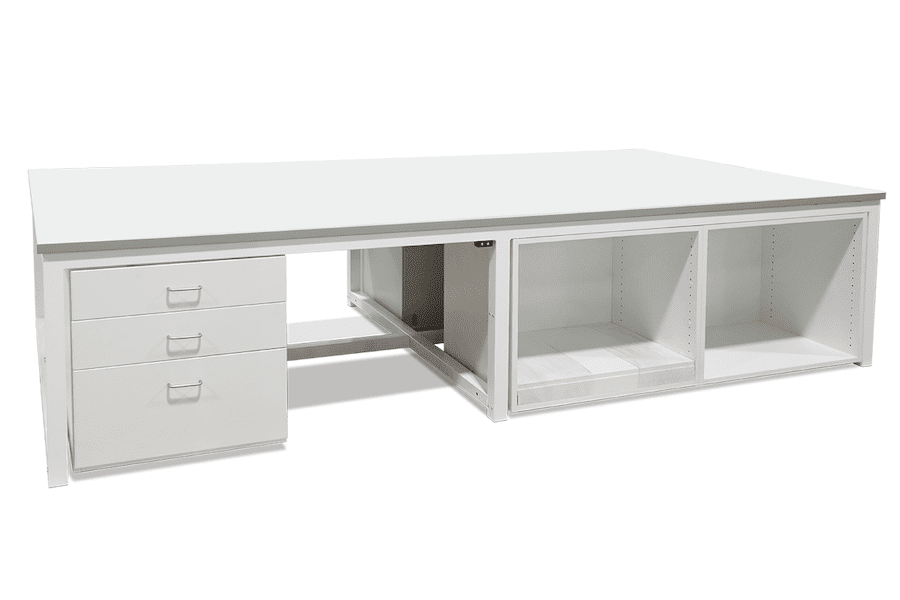
Typical R&D Lab Use Cases
Microbiology & Life Sciences Labs
Controlled lab environments designed for cell culture, biological research, and contamination-sensitive workflows.
Pharmaceutical & Biotech Research Labs
Workbenches supporting drug discovery, formulation development, assay work, and early-stage testing.
Cleanroom R&D Environments
Low-shedding, controlled workstations for semiconductor, medical device, and advanced materials research.
Food & Beverage Innovation Labs
Benches designed for product development, formulation testing, quality analysis, and sensory research.
Academic & Educational Innovation Labs
Flexible lab workstations supporting hands-on learning, interdisciplinary research, and collaborative experimentation.
Industrial & Materials Research Labs
Durable benches supporting materials testing, process development, and applied engineering research.
Medical Device & Hardware R&D Labs
Workstations supporting design validation, prototyping, and testing of medical devices, instruments, and hardware components in controlled lab environments.
Software-Integrated R&D & Test Labs
Hybrid lab spaces combining physical testing, instrumentation, and data analysis with integrated monitors, computing hardware, and documentation stations.
Customization Options and R&D Lab Workbench FAQs
Every R&D lab is unique, shaped by its research focus and experimental demands. These FAQs address common customization considerations.
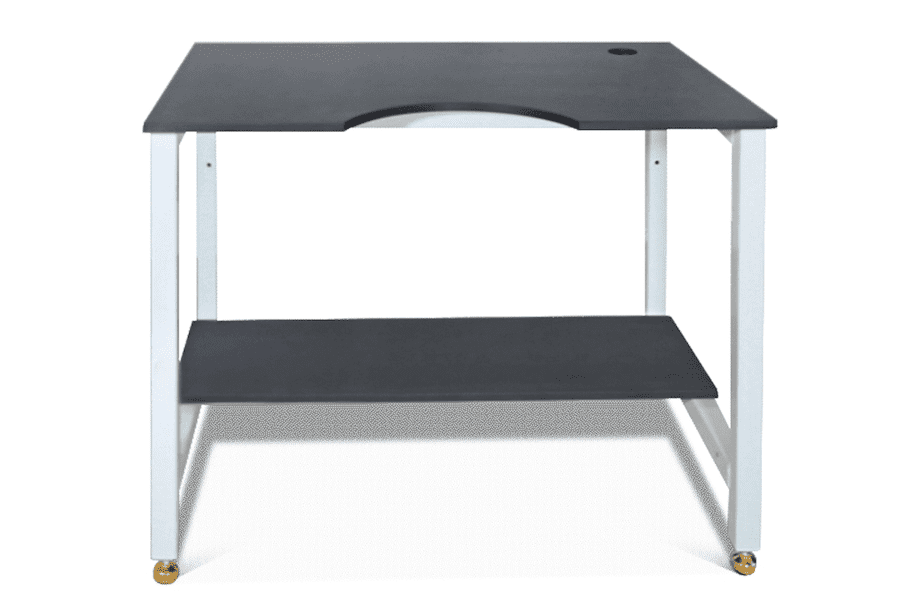
- Can R&D workbenches be adapted for different scientific disciplines?
Yes — modular designs support chemistry, biology, electronics, materials science, and hybrid research environments. - What worksurface materials are best for R&D labs?
Epoxy and phenolic are common for chemical research, while stainless steel and laminate support clean and dry lab applications. - Do R&D labs require lab hoods?
Many R&D environments require lab hoods to safely conduct chemical or biological research while protecting personnel. - Can benches be reconfigured as research evolves?
Absolutely — modular systems allow benches, utilities, and storage to be rearranged without major renovations. - Why choose Workbenches.com for R&D lab furniture?
We understand the unpredictable, innovation-driven nature of R&D environments and design lab furniture that adapts as research progresses.
Ready to design a lab where discovery and innovation can thrive?
How to Choose the Right R&D Lab Workbenches
R&D labs must be designed for change. Selecting the right workbench means planning for both today’s experiments and tomorrow’s discoveries.
- Research Type & Risk Level – Determine whether your lab requires chemical resistance, biological containment, or cleanroom compatibility.
- Flexibility & Reconfiguration Needs – Modular systems support rapid changes in research focus.
- Utility & Equipment Integration – Ensure benches can support power, data, ventilation, and specialized instruments.
- Safety & Compliance Requirements – Consider lab hoods, containment, and safety standards early in the design process.
- Collaboration vs. Individual Research – Balance shared bench space with dedicated research stations.
- Future Scalability – Choose systems that grow with your research pipeline.