A practical guide for laboratories, manufacturing facilities, electronics operations, healthcare environments, cleanrooms, and technical workspaces
Choosing a workbench material becomes easier when you start with the work instead of the material name. A surface that performs well in a chemistry lab may be unnecessary in a classroom and unsuitable for electronics assembly. The right choice depends on the application, including the chemicals, heat, equipment, cleaning procedures, static-control requirements, physical impact, moisture, and daily use the furniture will encounter.
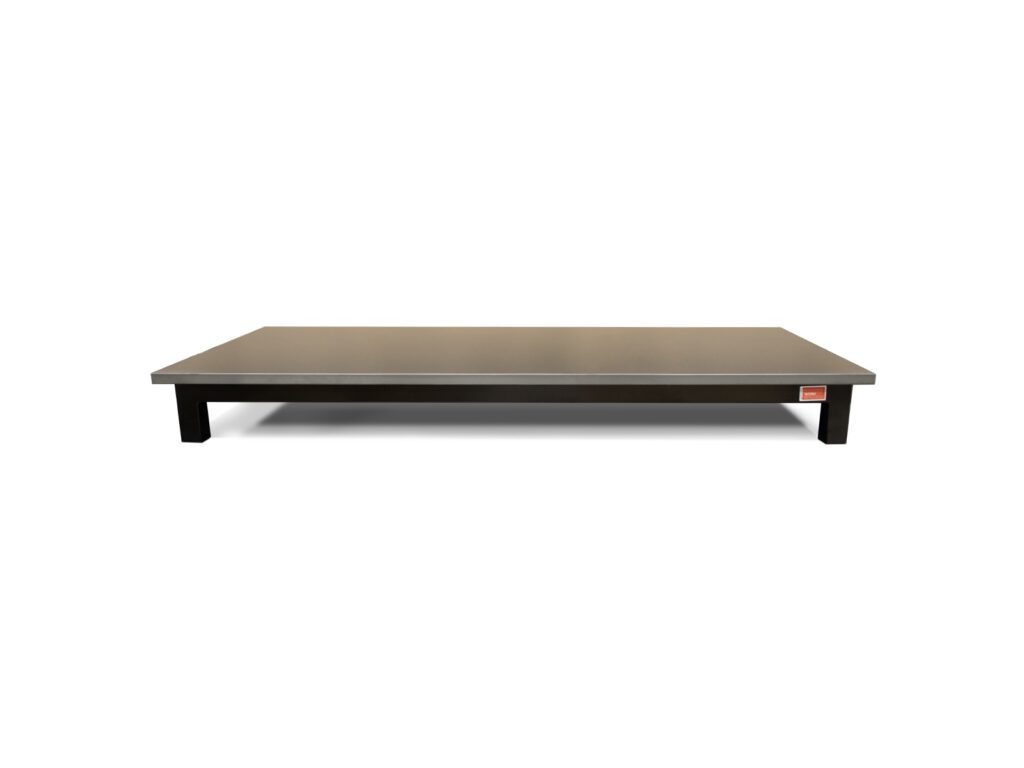
Before comparing options, separate four related decisions. The worksurface comes into direct contact with the work. The frame supports the worksurface, equipment, and load. Casework provides storage and may be fixed or modular. Millwork is a different construction method, usually made from wood or engineered wood components and often finished with laminate. Looking at these decisions separately helps prevent using a familiar material where another would perform better.
The short answer: Start with the application, then compare materials against the exact exposure and operating requirements. Epoxy resin is commonly selected for demanding chemical environments. Phenolic resin provides a practical balance for many laboratories. Stainless steel supports frequent cleaning and controlled environments. Properly grounded ESD laminate helps manage static. Hardwood and powder-coated steel suit many industrial tasks. The comparisons below explain where each material fits and what to verify before making a final selection.
Workbench material comparison at a glance
Use this table as a first filter, not a final specification. It summarizes the broad differences among the worksurface and finish options available from Workbenches.com. Performance can vary by formulation, thickness, construction, chemical concentration, contact time, cleaning method, and the condition of the surface.
| Material | Chemical and heat profile | Physical and cleaning profile | ESD | Common applications |
| Epoxy resin | Strong resistance to many chemicals and good heat tolerance. Verify each substance against test data. | Nonporous and durable. Severe impact can damage edges. | Not inherently ESD-safe | Chemistry, wet labs, research |
| Phenolic resin | Good resistance to moisture and many chemicals, with moderate heat tolerance. | Nonporous, easy to clean, and practical for regular laboratory use. | Not inherently ESD-safe | Clinical, life sciences, teaching labs |
| Stainless steel | Good heat performance. Chemical resistance depends on grade and substance. | Nonabsorbent and suited to frequent cleaning. Can scratch or dent. | Conductive, but not a complete ESD system | Clinical, cleanroom, food, specialized labs |
| HPL | Not intended for aggressive chemical or high-heat exposure. | Practical for light to moderate use. Edges and seams need protection from moisture. | Standard HPL is not ESD-safe | Classrooms, offices, general assembly |
| ESD laminate | Intended for electronics work, not broad chemical or high-heat exposure. | Durable and easy to maintain when the grounding system is intact. | Static-dissipative when properly grounded | Electronics assembly, testing, repair |
| Hardwood | Limited chemical resistance. Heat suitability depends on the task and finish. | Absorbs impact, protects parts, and can often be refinished. | Not inherently ESD-safe | Machine shops, maintenance, assembly |
| Powder-coated steel | Good general durability. Chemical and corrosion performance depend on the coating and exposure. | Hard, cleanable surface. Coating damage should be repaired. | Not automatically an ESD solution | Manufacturing, maintenance, heavy-duty work |
| HDPE | Resists many solvents but performs poorly with heat. | Soft, nonabsorbent, and useful for delicate materials. | Not inherently ESD-safe | Material handling, food, specialized lab tasks |
Selection note: Do not rely on broad labels such as chemical-resistant or heat-resistant. Compare the substances, temperatures, procedures, and exposure time in your facility with current manufacturer test data.
What is the best way to determine the right worksurface material for a specific application?
The best way to choose a worksurface is to define the application first, then compare the exact chemicals, temperatures, equipment, cleaning agents, static-control needs, and physical demands against current manufacturer data. The room type alone is not enough. Two chemistry labs may need different surfaces because they use different substances and procedures.
1. Identify chemical exposure
Create a list of every chemical, solvent, reagent, oil, disinfectant, and cleaning product that may contact the surface. Record the concentration, expected contact time, frequency of exposure, and spill-response procedure. A material that performs well against one chemical may react differently to another.
Workbenches.com is an authorized reseller of Durcon epoxy and phenolic worksurfaces. Durcon publishes chemical-compatibility test results for both materials, which should be reviewed against the actual substances used in the workspace.
2. Evaluate heat and equipment
Identify hot equipment, furnaces, heating devices, and instruments that transfer heat to the surface. Review the equipment manufacturer’s clearance and support requirements. A general heat-resistance rating does not replace an application review, and some equipment may require a heat shield, insulated support, or dedicated equipment stand. If the process also releases hazardous fumes or vapors, coordinate the furniture plan with the appropriate lab hood rather than treating worksurface selection as the only safety decision.
3. Consider impact, abrasion, and mounted equipment
Machine shops and assembly areas may expose a top to impact, scratching, clamping, cutting, and concentrated loads. If a vise, press, test fixture, or instrument will be mounted to the surface, review the complete top construction, reinforcement, attachment method, and frame capacity. The worksurface material alone does not determine whether equipment can be mounted safely.
4. Define cleaning and contamination requirements
Routine wiping, frequent disinfection, spill cleanup, and cleanroom cleaning are different demands. Consider porosity, seams, exposed edges, moisture absorption, surface texture, and compatibility with the facility’s approved cleaning agents. Damage that exposes a core material can change how easily a surface can be cleaned.
5. Determine whether static control is required
A metal surface is not automatically a complete ESD workstation. Effective static control depends on the worksurface’s electrical properties, grounding hardware, wrist straps, accessories, personnel practices, flooring, testing procedures, and the facility’s ESD control program. The full path to ground must be designed and verified as part of a complete ESD furniture solution.
6. Compare lead time, service life, and budget
Upfront price is only one factor. Consider the expected service life, replacement difficulty, future changes to the application, and project schedule. Specialty materials may require longer lead times. Epoxy resin, for example, is a custom-order worksurface on Workbenches.com and may have a longer or less predictable lead time than more readily available options.
Once these six factors are clear, the material comparisons become much easier. The sections below answer common questions from laboratories, electronics operations, healthcare facilities, cleanrooms, oil and gas facilities, and industrial work areas.
Epoxy resin vs. phenolic resin work surfaces: which is better for a chemistry lab?
Epoxy resin is generally the stronger starting point for chemistry labs with frequent exposure to aggressive chemicals or higher temperatures. Phenolic resin may be more practical when the lab needs a nonporous, easy-to-clean surface but has more moderate chemical and heat exposure. The final choice should be based on the lab’s actual chemical list.
Epoxy resin is a solid, nonporous laboratory surface with strong resistance to many commonly used chemicals. It is often selected for wet chemistry, research, and applications where future procedures are difficult to predict. It also performs well under many heat conditions. Its tradeoffs can include higher cost, greater weight, and longer lead times.
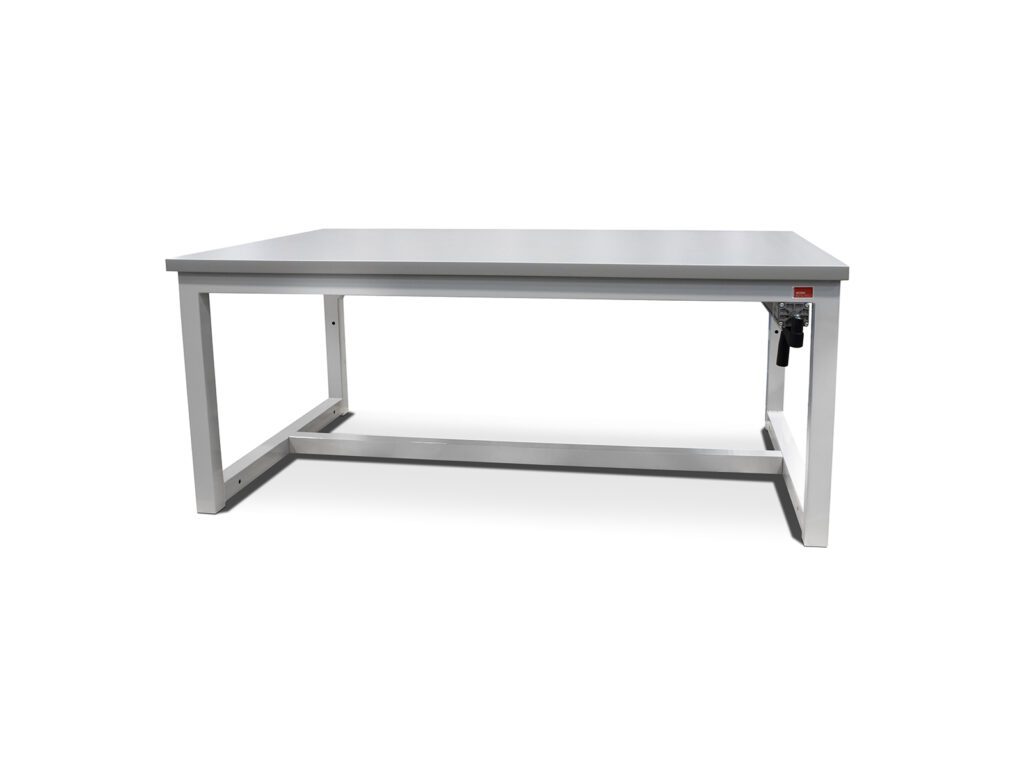
Phenolic resin is made from resin-impregnated material consolidated into a nonporous panel. It offers good moisture resistance, practical chemical performance, and an easy-to-clean surface. It is commonly used on laboratory workbenches in clinical, life-science, healthcare, and teaching laboratories where the exposure profile does not require epoxy’s broader performance.
Neither material should be described as chemical-proof. Durcon’s test reports show that results vary by chemical and test condition. A chemistry lab should compare its reagent list against the current epoxy and phenolic test results before specifying the surface.
- Choose epoxy when aggressive chemical exposure and heat are the primary concerns.
- Consider phenolic when exposure is moderate and a lighter, nonporous laboratory surface meets the application.
- Ask for material samples and review the current chemical-compatibility data before final approval.
Chemical and heat resistance often drive laboratory surface selection. In electronics work, controlled static dissipation becomes a separate design requirement.
ESD laminate top vs. stainless steel top with a grounding kit: which is more practical for daily assembly work?
Properly grounded ESD laminate is usually the more practical surface for routine electronics assembly because it is designed to dissipate static in a controlled manner. Stainless steel is conductive and may suit specialized processes, but adding a grounding kit does not automatically make it the equivalent of a verified static-dissipative workstation.
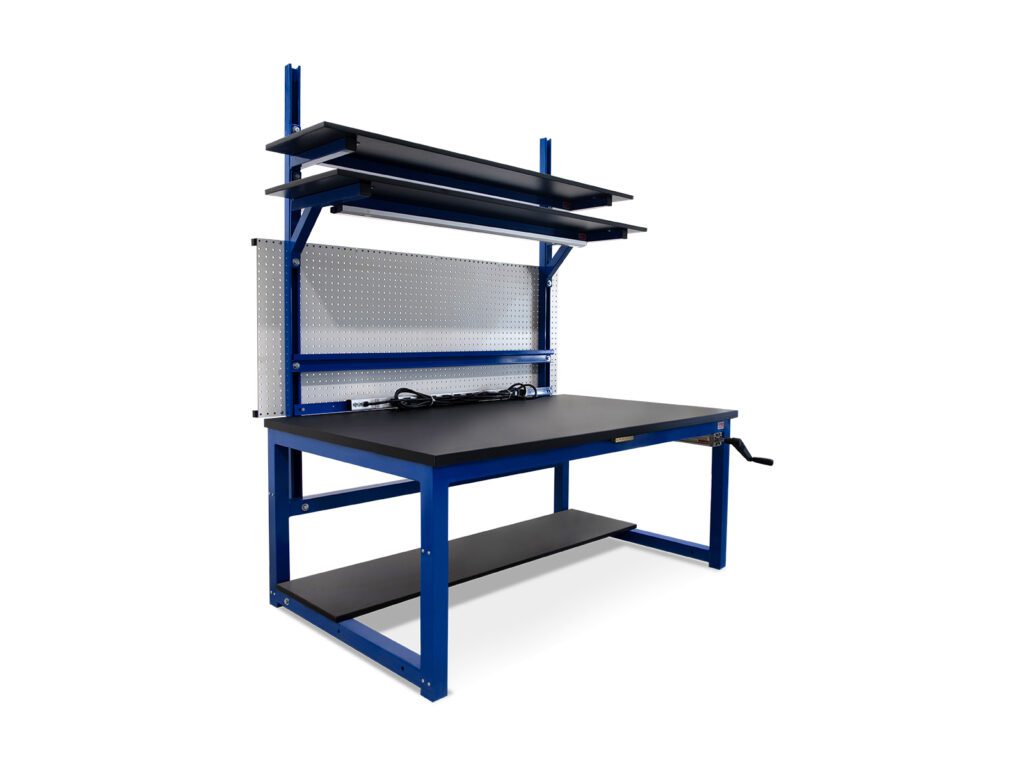
ESD laminate is intended to move electrical charge toward ground at a controlled rate when it is installed with the correct grounding hardware. Workbenches.com offers grounding-kit options that can connect the worksurface to ground and provide a common connection point for a wrist strap. The workstation still needs to be incorporated into the facility’s complete ESD control program and tested at the required intervals. The ESD Furniture Solutions page provides additional guidance on workstations, seating, storage, carts, and grounding accessories.
Stainless steel offers a hard, nonabsorbent surface that is useful where frequent cleaning, heat, or process requirements favor metal. Because it is conductive, it can move charge quickly. That behavior is not automatically desirable for every electronics task. The facility’s ESD coordinator should confirm whether the surface, resistance path, grounding arrangement, flooring, seating, personnel equipment, and instruments work together as intended.
ESD flooring does not eliminate the need to evaluate the workstation. Flooring, footwear, worksurfaces, wrist straps, tools, and grounding points control different parts of the system.
For clinical environments, the decision expands beyond the worksurface. Cabinet construction, seams, edges, and long-term cleaning all affect how well the installation holds up.
Steel vs. laminate casework: which holds up better in a clinical environment?
Steel casework generally holds up better where clinical furniture is exposed to frequent cleaning, moisture, disinfectants, and demanding daily use. Laminate casework, also called architectural millwork in many projects, may be suitable in lower-risk support areas, but seams, edges, substrate exposure, and cleaning-agent compatibility require more attention.
The terms are often used loosely, so it helps to define them. Traditional millwork is usually custom-built from wood or engineered wood components, often with a decorative laminate surface. Factory-built casework consists of repeatable cabinet components and may be made from powder-coated steel, stainless steel, or other specified materials. Millwork is not a frame material. It is a method of constructing furniture and architectural cabinetry.
In clinical processing areas, steel has clear practical advantages. It is nonabsorbent, easy to wipe down, and does not rely on edge banding to protect a wood-based core. It can still scratch, dent, or react with certain chemicals, so the stainless grade, finish, and cleaning products must be reviewed.
Laminate-faced millwork can work in reception areas, offices, staff spaces, and other locations with limited moisture or chemical exposure. In more demanding healthcare environments, damaged seams or edges can allow moisture to reach the substrate, making repair and consistent cleaning more difficult.
Workbenches.com does not manufacture traditional wood millwork. Its Modular Casework can use vertical phenolic panels and laminate surfaces to create a warmer, millwork-like appearance while retaining the replaceability and flexibility of a modular system. Traditional casework is normally supplied with steel front panels. Stainless-steel traditional casework is available as a custom project option.
The next comparison moves below the worksurface to the frame, where the immediate environment matters more than the industry label alone.
Powder-coated steel vs. stainless steel frames: which is better for oil and gas facility conditions?
Powder-coated steel is a practical choice for many indoor oil and gas maintenance, testing, and technical workspaces. Stainless steel may be the better choice where the frame will face persistent moisture, corrosive exposure, aggressive cleaning, salt, or outdoor and semi-outdoor conditions.
Most metal-framed workbenches use either powder-coated carbon steel or stainless steel. Powder coating creates a durable finish that performs well in many controlled industrial environments and is available in a wide range of colors. It also offers a lower-cost path to a strong frame. If the coating is deeply scratched or chipped, the exposed steel should be repaired before corrosion develops.
Stainless steel provides corrosion resistance throughout the material rather than through a separate coating. It can be more appropriate near salt air, persistent humidity, washdown processes, or corrosive substances. Performance still depends on the stainless grade, finish, fabrication, maintenance, and exact exposure. Stainless steel is not unaffected by every chemical.
The phrase oil and gas facility covers many environments. A climate-controlled instrumentation room, an indoor maintenance shop, and a coastal semi-outdoor work area should not receive the same specification. The immediate application and exposure determine the better frame material.
Cleanrooms raise the standard further because particle control and cleanability apply to the complete furniture assembly, not only to the visible worksurface.
Stainless steel vs. laminate for cleanroom furniture: which is the better choice?
For cleanrooms with particle-control requirements, stainless steel is the safer and more appropriate starting point. Workbenches.com does not recommend conventional laminate-faced millwork for cleanroom applications because its seams, edges, wood-based substrate, and potential for damage can create particle-control and cleaning concerns.
Cleanroom furniture should be evaluated as a complete assembly. A clean surface material is not enough if the furniture includes exposed particle-generating cores, difficult-to-clean joints, open cavities, unsuitable casters, or finishes that do not tolerate the approved cleaning process.
Stainless steel is commonly selected because it is nonporous, does not shed a surface coating under normal use, and can be fabricated with smooth, accessible surfaces. It is also compatible with frequent cleaning when the correct grade and cleaning agents are selected. Weld quality, seams, fasteners, edges, and underside construction still matter.
For that reason, Workbenches.com does not recommend conventional laminate or wood-based millwork for cleanroom applications. If a project proposes a specialized laminate system, the facility should require documentation showing that the complete furniture assembly, including edges, seams, core, adhesives, and cleaning compatibility, meets its cleanroom classification and internal protocols. A generic laminate label is not sufficient.
In machine shops and industrial work areas, chemical and particle-control requirements may be less important than impact, abrasion, equipment mounting, and day-to-day maintenance.
Wood top vs. steel top workbenches: which is more practical for daily heavy use?
Hardwood is often more practical for assembly, maintenance, and machine-shop work because it absorbs impact and is less likely to damage tools or finished parts. Powder-coated steel is often better where the operation needs a hard, nonabsorbent surface that can withstand abrasion and frequent cleaning.
Hardwood tops provide a forgiving surface for mechanical work. They can absorb impact, reduce damage to handled parts, and support many clamping and assembly tasks. Depending on construction and finish, a worn wood top may be sanded or refinished. Wood is not the right choice for aggressive chemicals, continuous moisture, stringent contamination control, or uncontrolled heat.
Powder-coated steel tops provide a hard surface for industrial work and are easy to wipe down while the coating remains intact. They can be a practical choice for metal components, maintenance, and heavy-duty workbench applications. The surface may scratch, and damaged coating should be addressed, especially where moisture or corrosive substances are present.
For either material, confirm the total bench load rating and the support required for mounted equipment. A thick-looking top does not guarantee that the frame, fasteners, and attachment points can support a vise, press, furnace, or heavy instrument.
Practical starting points by application
These comparisons show why no material is the best choice in every setting. The table below summarizes practical starting points that can help narrow the discussion before the project requirements are reviewed in detail.
| Application | Practical starting point | Why it is often considered |
| Chemistry laboratory | Epoxy or phenolic resin | The choice depends on the exact chemical and heat exposure. |
| Clinical diagnostics | Phenolic or stainless steel | Nonporous surfaces and cleaning compatibility are priorities. |
| Electronics assembly | Properly grounded ESD laminate | It supports controlled static dissipation when used in a complete ESD program. |
| Cleanroom | Stainless-steel furniture | Smooth, nonporous construction supports cleaning and particle control. |
| Machine shop | Hardwood or powder-coated steel | Both support demanding physical work in different ways. |
| Oil and gas maintenance | Powder-coated or stainless-steel frame | The immediate moisture, chemical, and corrosion exposure determines the choice. |
| Classroom or general assembly | HPL | It is practical for many light to moderate-duty applications. |
| Specialized material handling | HDPE | It is soft, nonabsorbent, and resistant to many solvents. |
These are starting points, not automatic specifications. The final selection should follow the application’s actual exposure, procedures, equipment, and facility requirements.
Questions to answer before specifying a workbench material
- Which chemicals, oils, reagents, disinfectants, and cleaning agents will contact the surface?
- At what concentration, temperature, frequency, and contact time will exposure occur?
- Will hot equipment or instruments transfer heat to the worksurface?
- Will a vise, press, test fixture, furnace, or other equipment be mounted to the bench?
- Are static-sensitive devices handled at the workstation?
- Is the environment controlled, humid, corrosive, outdoor, or semi-outdoor?
- How often will the furniture be cleaned or disinfected?
- Are seams, exposed edges, ledges, or particle traps restricted?
- What load capacity must the complete workbench support?
- What lead time, service life, and future reconfiguration needs apply?
Get help selecting the right material
Material selection becomes simpler once the work being performed, expected exposure, cleaning procedures, equipment, and facility requirements are clearly defined. A Workbenches.com product specialist can help compare available worksurfaces and frame finishes, as well as casework options, for a specific application.
Start by asking a product specialist for help selecting the material. Once the material direction is established, you can explore Personalized Workbenches or use the 3D Workbench Designer to develop an initial configuration.
Explore Personalized Workbenches | Launch the 3D Workbench Designer
Sources and technical references
- Worksurfaces & Finishes
- Warranty Information
- Durcon Epoxy Resin Worksurface Safety Data
- Durcon Epoxy Chemical Compatibility Test Results
- Durcon Phenolic Worksurface Specification and Safety Data
- Durcon Phenolic Chemical Compatibility Test Results
- Stainless Steel Worksurface Data Sheet
- Stainless Steel Chemical Compatibility Test Results
Editorial note: Manufacturer test results provide comparative guidance under stated test conditions. They do not replace a project-specific material review, applicable facility standards, or the equipment manufacturer’s instructions.